



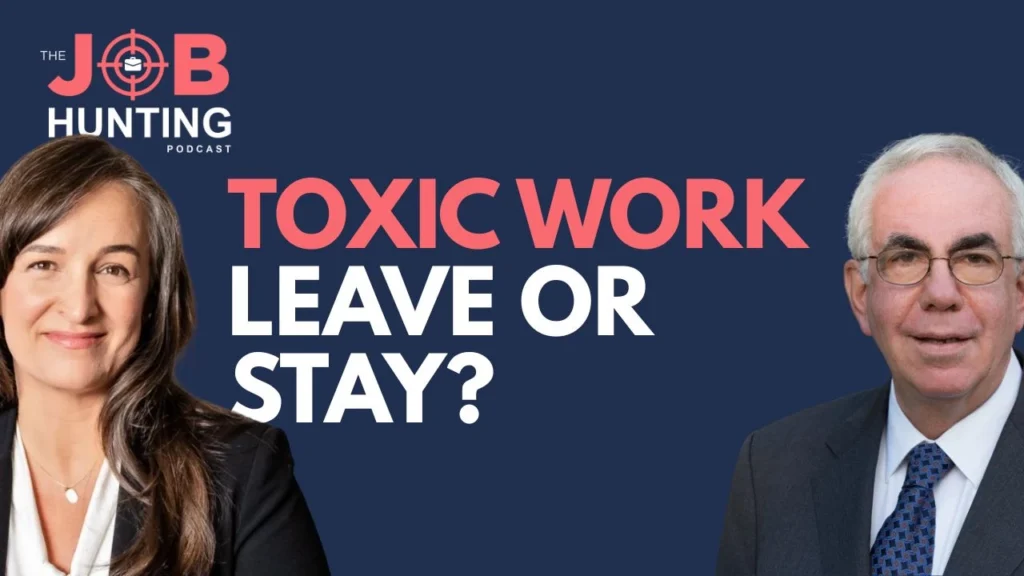
If 2025 felt harsher than you expected, you were not imagining it. As a career coach, I’ve watched experienced professionals, including senior leaders, get caught in longer hiring cycles, more competition, and a colder tone in recruitment communication. In this episode of The Job Hunting Podcast, I sat down with Geoff Slade, Chairman of the Slade Group, for our end-of-year reflection and forward-looking conversation.
Geoff has a rare vantage point. His group operates across multiple recruitment brands and covers everything from entry-level roles through to senior executive appointments. He’s also been in the recruitment industry for decades, which gives him pattern recognition that most job seekers never get access to.
In this blog post, I’m summarising and unpacking key points from our conversation, with a focus on what corporate professionals and executives can do right now. We discussed the flat job market, the rise of interim roles, the reality of negotiating salary and flexibility, and how AI is changing the way applications look and feel. Most importantly, we talked about how to market yourself so you stop blending in.
When I asked Geoff to describe the job market in 2025, his answer was simple: flat.
But what stood out more was his observation about how companies communicated with candidates. He described it as more ruthless, not always because decisions were harsher, but because the communication often had no warmth, no context, and in many cases no response at all. That matters because job searching is already emotionally taxing. When communication becomes curt or disappears completely, candidates start filling in the blanks themselves. Confidence drops, momentum slows, and people begin to play small.
We also talked about how delays are not always the recruiter’s choice. Geoff explained that recruiters can be left waiting too, as decisions cascade down from the top of the organisation.In other words, silence can be structural. It still feels awful, but it changes how you interpret it and how you plan.
My practical takeaway: if the process is moving slowly, you need multiple active lines in your strategy. One application and a hope is not a strategy in a flat market.
One of the most important shifts we discussed is the increased demand for interim and temporary roles. Geoff noted that interim work is growing, and it’s no longer confined to administrative or junior levels. There is growth in interim roles at the very senior executive level, too.
Why is this happening? Geoff’s view is that uncertainty is affecting both sides. Companies are reluctant to make long-term decisions because they do not feel confident about what is coming next. Candidates are also cautious because they do not know what they are walking into. For executives who have built their careers around permanent employment, this can feel destabilising. But it also opens a door: interim roles can become a fast way back into influence, visibility, and income, especially when permanent roles are moving slowly.
Geoff also shared a crucial point about money. If you step into a role without permanency, you should negotiate a substantially higher rate to reflect that risk. And you should clarify whether there is a realistic pathway to permanency, which often depends on why the interim role exists in the first place.
My practical takeaway: treat interim roles as a strategic asset, not a consolation prize. If you approach them properly, they can become your strongest repositioning tool in 2026.
Flexibility has been one of the hardest issues for senior candidates in 2025. I have seen clients walk away from offers because the flexibility on the table did not match what they needed, but Geoff was blunt about the risk: declining an offer in 2025 is something he would only do if you are confident another job will follow.
We also discussed whether the market will return to five days a week in the office. Geoff’s view is that most organisations will not go back across the board. He described that shift as essentially done. In his own organisation, they operate on three days in and two days out. However, he also raised a concern that some employers share: hybrid can create productivity gaps for some people, and leaders are paying attention.
My practical takeaway: flexibility remains possible, but you need to negotiate it like an executive. That means understanding what the organisation fears, proposing solutions, and demonstrating trustworthiness through outcomes, not promises.
Another theme that has dominated 2025 is pay. Salaries on offer have often been lower than what was available two or three years ago, and candidates feel the power imbalance. When I asked Geoff whether there is still room to negotiate after an offer is made, he said yes, because receiving the offer means you already stand out.
He shared a story about a 28-year-old who felt the money was under par. The employer told him to do homework by applying elsewhere. He had already done it, and he brought evidence of other offers, which strengthened his position in negotiations.
Geoff also shared a smart alternative when base salary is constrained: performance-linked reward. In his example, he suggested adding incentive structures such as short-term and long-term incentives, aligning pay with outcomes.
My practical takeaway: negotiation is still possible, but it needs preparation. The more senior you are, the more you should expect to negotiate with evidence, options, and commercial logic.
We spent time on AI because it is affecting job searching in two different ways. First, I raised a concern from last year: AI-written applications and cover letters are starting to look the same. Geoff’s observation was interesting: he does not think most job seekers are using AI yet, but he warned that those who do cannot ignore their own creativity. His point was simple. If everyone submits an AI-generated application, nobody stands out. Passion, clarity, and distinctive thinking become the differentiators.
Second, Geoff described what his team struggles with most: candidates who apply in a “vanilla” way, as if they do not care whether they get the role. He argued that candidates need to convey why the role matters to them, why they are a fit, and what they bring beyond a checklist. This matters even more for executives, because at senior levels, differentiation is rarely about technical capability alone. It’s about judgement, presence, integrity, and communication.
My practical takeaway: use AI for structure and speed, but never outsource your voice. Your job is to sound like a decisive human who knows what they want and why.
Two topics consistently come up in my work: networking and executive presence. In the episode, I shared that these are the keywords that generate the most engagement from my audience, and I believe they are linked. Geoff framed executive presence as being remembered. If you walk into a room and disappear, you lose the advantage that seniority should give you. He also pointed to a common pattern: the longer someone is out of work, the less confidence they have, and confidence is foundational to presence.
One of Geoff’s strongest views was about relationship-building. He sees reluctance, especially among younger professionals, to build face-to-face relationships. He does not attribute it to laziness, but to reduced confidence and comfort with real-world connections. For executives, this is an opportunity. If others avoid relationship-building, the person who does it well becomes even more memorable.
My practical takeaway: networking in 2026 will reward professionals who are willing to show up, be specific, and be seen.
To access my easy-to-apply strategies, you need to be subscribed to my weekly newsletter. Click here to subscribe now.
Geoff’s view is cautious optimism. He believes the market has improved marginally in recent months.
The hallmarks we highlighted for 2026 include:
To stay ahead, executives should focus less on volume and more on positioning, relationships, and decisiveness. The market rewards people who are specific about what they want and able to show how they create value.


Hello, I’m Renata Bernarde, the Host of The Job Hunting Podcast. I’m also an executive coach, job hunting expert, and career strategist. I teach professionals (corporate, non-profit, and public) the steps and frameworks to help them find great jobs, change, and advance their careers with confidence and less stress.
If you are an ambitious professional who is keen to develop a robust career plan, if you are looking to find your next job or promotion, or if you want to keep a finger on the pulse of the job market so that when you are ready, and an opportunity arises, you can hit the ground running, then this podcast is for you.
Renata Bernarde (00:00)
The job market in 2025 has been marked by layoffs and highly competitive for job seekers. It has also been marked by the rise of short-term contracts and interim roles.
presence in the office despite the insistence of some employers to bring workers back into the office full-time.
Another topic I have worked a lot with my clients this year has been the salary negotiations piece, since salaries on offer seem to be lower than those being offered two, three years ago.
And also, what is executive presence after all? How do we network if offices and business centers are half empty? And what does self-promotion looks like? In this conversation with Geoff Slade, chairman of the Slade Group, we discuss all of these issues that marked recruitment and the job seekers experience in 2025, highlighting the flat job market, the ruthlessness in recruitment communication,
and the impact of layoffs on job seekers.
We then explore what we believe will be the hallmarks for 2026, such as the growing demands for interim roles, the challenges of negotiating flexibility, and the influence of AI on job applications.
We also touch on the importance of self-marketing, networking, and building executive presence in a competitive job market.
This is the third time that Geoff joins me at the end of the year for a reflection and a forward-looking conversation. I love that it’s a casual chat between friends and you can be a fly on the wall listening to us. Why Geoff? Because he is recognized as a captain of his industry here in Australia, the originator of high quality recruitment services in the country. And his group operates from entry-level clerical jobs
all the way to senior executive appointments through their several recruitment brands. Interchange Bench, Slade Group, Synchro Partners, and Transearch As recent as last week, a client mentioned how a conversation with Geoff years ago, after not moving forward in a role, changed his outlook in his life and career. He has that impact on people and represents what we want recruiters to be for us.
both great for their clients and for the candidates. I hope that you will enjoy this conversation as much as I did.
Renata Bernarde (02:56)
We’re both drinking coffee. This is a casual conversation. This is not your first rodeo. Geoff we’ve done this how many times now? Three or four? I can’t remember. Every year, that way we do this. I’m going to put the link below. mean, for those…
Geoff Slade (02:58)
Is that alright?
Yeah, yeah.
Renata Bernarde (03:14)
hardcore listeners who want to go back and see what life was like back in 2023 and 24. I’ll put the links below. But I couldn’t wait to have this conversation with you because I didn’t expect 2025 to go the way it went. And I feel like I was too Pollyannaish back at the end of 2024 with my predictions for early 2025.
and it didn’t go well, it didn’t go well. It was not what I expected.
Geoff Slade (03:46)
What were my predictions? can’t remember.
Renata Bernarde (03:49)
No, you were much more taciturn. You were much more pessimistic than I was. You knew, you knew. But I think we both thought that once the elections were over, both in the US and in Australia and UK, we thought that that would be a stabilizing factor. And I don’t think that that was at all. So I want to start with this overview of 2025.
What would you describe the job market to be in 2025? Flat. Were there any unexpected developments that took job seekers or employers by surprise?
Geoff Slade (04:23)
Pretty flat.
I think possibly some companies
where
I hesitate to use the word ruthless, but I think more ruthless in their application of the way they communicated with candidates, ⁓ which probably left a sour taste in the mouth of quite a lot of people. Either that or they didn’t hear at all, which I think is a common, and that’s not just, you know, just not corporates. I mean, that’s a lot of recruitment companies too.
Renata Bernarde (04:50)
Mm-hmm.
Yes, when you say
ruthless, are you saying they didn’t reply back to candidates, letting them know outcomes? What do mean by that?
Geoff Slade (05:16)
Yeah, well, that, but also when they did, it was
cursory. There was no sort of feeling or I’m sorry to let you know or ⁓ no heart in the communication. And I think a lot of people were very disappointed in that.
Renata Bernarde (05:29)
Yeah.
Yeah.
I can imagine, yeah. This year I interviewed a recruiter who lost her job, a talent acquisition manager who worked in-house and lost her job in a large-scale layoff. And she was so horrified with what she experienced as a job seeker. It really changed her. It really affected her as a talent acquisition manager, now back at work.
Geoff Slade (06:00)
for you.
Renata Bernarde (06:09)
And she found a job relatively quickly, but that’s because she knows so much about how things work. still very shocked by the ruthlessness in the job market. Yeah. Yeah. Okay. I’ll put the link to that episode below. She’s in the UK and that was a really interesting one because I don’t have a lot of UK guests on my podcast. So it was nice to have her. ⁓ I think 2025.
Geoff Slade (06:20)
Yeah.
Hmm.
Renata Bernarde (06:36)
From my perspective, it was a surprise right early in the year because it felt like there were so many layoffs happening at scale in large organizations. mean, most recently we’ve had A and Z, but throughout the year we’ve had lots of large layoffs. And for the job seeker, it gives them a little bit extra worry because of the competition in the job market.
even though we don’t see a lot of employed professionals competing with the job seekers, there were very highly qualified job seekers competing with each other. So that’s something that throughout the world, you know, I have clients in the US and we had the public servants and then we had the United Nations and all its, you know, affiliated agencies and then we had all the tech.
companies and know many banks and financial jobs. People are still unemployed since April May and it’s been really tough.
Geoff Slade (07:39)
I think the turmoil in markets generally or countries generally, know, the world’s not in a pretty place at the moment.
Renata Bernarde (07:47)
Mm-hmm.
Yeah.
Geoff Slade (07:52)
I think people are suffering as a result of that. No one knows what our friend Mr. Trump is going to do next. England’s almost shot itself in the foot. know, there’s chaos almost wherever you look. And we’re probably as well off as anybody almost, from what I can see.
Renata Bernarde (08:10)
Yes. ⁓
Yeah, it seems like we have a buffer here in Australia compared to other economies. Let’s go back.
Geoff Slade (08:24)
I’m
actually learning anything from all of that is another question. Actually in Victoria, mean Victoria’s basket case. And, you know, the job market in Melbourne is very tough.
Renata Bernarde (08:29)
Yes, good point.
Yes.
Agreed, yeah.
Geoff Slade (08:40)
And I guess
given you’re in Melbourne and I’m in Melbourne, that’s where most of your customers are. And it’s certainly where most of my customers are.
Renata Bernarde (08:44)
No!
Yeah, I do have quite a good balance between Melbourne and Sydney, and I have seen similar issues in Sydney as well. was a time when I wasn’t even working as a career coach, where people were moving to Sydney for roles. You don’t see that happening anymore. So that’s a problem, I think, with all of our big cities.
Geoff Slade (09:02)
Yeah.
Renata Bernarde (09:09)
Tell me about the roles that you find are in demand, that has been in demand this year in 2025. Were there industries or roles that you feel that were more in demand than others?
Geoff Slade (09:23)
Not really. think one area where there has been increased demand is in interim and temporary help.
Renata Bernarde (09:25)
No.
Yes. That market has grown, hasn’t it? Yeah. Now that that’s true. Do you think it signals that the employer is uneasy to make long-term decisions and that’s why they’re contracting for the time being because of, yeah.
Geoff Slade (09:38)
Yeah.
Well, I think it’s two-way. Companies are reluctant because they’re not confident of what’s coming down the pipeline next. I think candidates equally are not confident because they don’t know what they’re going to get into. And people are reluctant to move, generally speaking, for that reason. And so they’re much harder to shift.
Renata Bernarde (10:02)
Mm-hmm.
Mm-hmm.
Yeah. In previous discussions, Geoff, I remember us discussing the fact that the people employed are not applying for roles and when they are, they don’t accept it. They go back to their employer and renegotiate their packages. Is that still happening? I’m assuming that senior level that Slade and Trans-Search operate in Yeah.
Geoff Slade (10:37)
Yeah, it is happening. ⁓
It largely depends on the reason that they’re they’re prepared to look in the first place. You know, if the, I mean, usually the immediate manager is the big problem. That’s why people move. So depending on his or her behavior will largely indicate whether or not someone will take a job or not take a job.
they think they can live with this, then they may not end up taking a new job unless they’re very confident that they’re moving to something more in line with what they’re looking for. But otherwise, they’re prepared to go back and discuss it.
Renata Bernarde (11:09)
Mm.
Yeah. I think what that does to the process for the job seeker is that, you know, the second and the third options, they have to be on standby for way longer, not hearing back from the recruiters for weeks until things…
Geoff Slade (11:30)
Yeah.
Well, quite often
the recruiters don’t hear back from the company for weeks either. You know, that’s not always the case clearly, but the reality is that recruiters do get mucked around to an extent by the people that they’re talking to within the corporates. But the person they’re talking to in the corporates probably getting mucked around by the person up the tree too.
Renata Bernarde (11:39)
Correct.
Mm-hmm.
Geoff Slade (11:59)
So, you know, it just balloons down or cascades down the line.
Renata Bernarde (12:06)
Yes. I remember being in that situation as a candidate just waiting to hear back from the recruiter. What’s the best practice for the recruiter? What do they do to keep in touch with the candidates? Is it better not to contact the candidates because you have to be careful what you say?
Geoff Slade (12:24)
No, I don’t think so. I think you need to stay in communication. Even if it’s to say, I’m sorry, I don’t have any further news for you.
Renata Bernarde (12:27)
Okay.
Yeah, well, that’s not happening, Geoff, most of the time. Okay. So ⁓ the other discussion we had last year was remote and hybrid work. And I even did a presentation as a guest of your team to a bunch of chief people officers. You weren’t there, but I think you remember that happened, I think September 2024.
And the whole conversation was about hybrid work and how to optimize performance with employees that were not working full time in the office anymore. And I made a very big case for hybrid work and for elevating leadership development of.
leaders and managers rather than bringing people full time to the office. And then the very next day, Amazon said, ⁓ want, we want every employee to come back to the office full time. And I felt like.
I felt like people would then think, what was Renata saying? Why did she come here and talk about hybrid? Look at the big, gigantic Amazon asking everybody to come back to the office full time. I still think I was right. Adam Grant recently did a panel discussion where he showcased a whole bunch of research showcasing that.
hybrid work can perform just as well as full time in the office work. If not better, depending on your industry and the type of work that you do. What do you think employers are willing to negotiate with job seekers that want flexibility? I’ve had situations where it has been really hard for my clients to negotiate flexibility in 2025 and then they declined
the job offer.
Geoff Slade (14:26)
Well, wow. I’m not sure I’d be doing that in 2025 unless I was very confident I’d find another job.
Renata Bernarde (14:35)
I agree, yeah, it’s hard.
Geoff Slade (14:37)
you know,
market is tough. think we’re starting to see some green shoots, perhaps even beyond green shoots in the last two or three months. Whether that will continue into 2026, I think is debatable, depending on things like economic decisions by the Reserve Bank and that sort of thing.
Renata Bernarde (14:54)
Mm-hmm.
Geoff Slade (15:03)
I don’t think there’s that many companies that are insisting on five days a week in the office. I think that horse is bolted, frankly. I don’t think we’ll ever get back to five days a week in the office across the board.
Renata Bernarde (15:09)
Yes.
Mm-hmm.
Geoff Slade (15:20)
We have three and two here, three days in and two days out. Seems to work okay. But I do think it has an effect on productivity. I’ve got a friend, down on the Mornington Peninsula who owns a golf course. And I had a beer with him a few months ago and I said, how’s business? He said, well, Fridays have picked up and I said, what do you mean? Knowing exactly what he meant.
Renata Bernarde (15:32)
Mm-hmm.
Geoff Slade (15:49)
And he said, Friday used to be our worst day. Now it’s arguably our best, apart from the weekend. And I said, how come? said, they’re all working from home, jokingly. But nevertheless, whether people make up those hours that give them that flexibility, I think is questionable. Some people clearly do, and some people will always go above and beyond.
Renata Bernarde (15:59)
Thank ⁓
Yep.
Yeah.
Geoff Slade (16:14)
But
I think lots of people don’t. And in many respects, I think it’s inherent in Australians that they think they can get away with something.
Renata Bernarde (16:17)
Mm.
Mm.
Geoff Slade (16:26)
Unfortunately.
Renata Bernarde (16:28)
Yes. Look, I’m going to plug in my services here. I actually am very passionate about helping leaders who are working with hybrid teams because I know it has been a difficult transition for them getting to know their staff well and understanding how to bring the best out of them in a hybrid or remote environment. actually work with organizations on that. I do two team performance workshops. work
Geoff Slade (16:54)
That is the end of it.
Renata Bernarde (16:55)
coaching managers, I’ve done this for federal agencies, know, government ⁓ environments. I’ve done it for not-for-profits. I’ve done it for manufacturing companies. So if you’re listening and you’re interested, I’d be delighted, delighted to have a conversation with you. And I really want to grow that side of my business because I do think that it is possible to optimize a remote or hybrid team.
by just learning some, having extra tools in your leadership tool set to make sure that you are achieving your goals and not just accepting a team that’s underperforming and not cohesive. You want cohesion, you want culture to develop in those environments, yeah.
Geoff Slade (17:38)
⁓ Well, you should come
and talk to me because I’d be interested in having a chat with you about that.
Renata Bernarde (17:45)
You know what? I’m going to come and have a coffee with you down at the farm. I keep saying to you I’ll be doing this, but I will because now the weather is improving. I’d much rather drive south than drive north these days. Okay. All right. So let’s talk about… Sorry? good. I’d love to drink some wine as well instead of coffee. think that that would be even better.
Geoff Slade (17:49)
Alright.
You’re than welcome. You’re more than welcome.
Well you better come in the
afternoon not in the morning.
Renata Bernarde (18:12)
Okay, okay, deal. All right. So, okay, so that’s been 2025. What about 2026? Can we be optimistic again? Or are we just sort of? No, you weren’t. was.
Geoff Slade (18:27)
Well, I don’t think I was overly optimistic last year.
And I do actually think that it is improving marginally. But, you know, it’s not going to be back to pre-COVID anytime soon.
Renata Bernarde (18:45)
After I interviewed you last year, a few months went by and then I interviewed your wife, Anita Ziemmer. I’m going to put the link below. And she said something that it was quite shocking to me, but very true. She said, I don’t think that the changes, I’m going to paraphrase her. I don’t think the changes are seasonal anymore. I think that they are tectonic. Like there is a change happening in the world of work.
And it’s more than just ups and downs from time of the year or economy or, you know, political issues.
Geoff Slade (19:18)
Yeah. I
haven’t seen the interview. didn’t even tell me she’d been interviewed, but…
Renata Bernarde (19:23)
Yes.
It was really good. I was in the UK, she was here. ⁓ I always seem to interview Anita when I’m somewhere else. But yeah, I kept thinking about that because of artificial intelligence, because of remote work and hybrid work. And now you said entering and contract work seems to be growing.
What does that mean for people that are from my generation? I’m X, right? And we want a permanent role and we want an income that comes regularly in the bank. My clients are not from this generation that understands freelancing and contracting and portfolio careers. They can adapt, but most of them don’t want to.
Geoff Slade (20:14)
But you’re probably a bit different than most of your Gen X colleagues because you’re an entrepreneur. You know, you’re the exact opposite to what you just described.
Renata Bernarde (20:20)
Yeah, so I’m different.
I know I’m talking about my clients here and my listeners, right? They really struggle with this idea of changing the way that they were brought up to understand how to earn a living.
Geoff Slade (20:36)
Understand?
Unfortunately, I don’t think it’s going to change if anything is going to continue to go the other way.
So, you know, from tectonic to more tectonic. And, you know, how could I argue with my wife? She knows a lot more than I do.
Renata Bernarde (20:50)
Mm-hmm.
Geoff Slade (20:57)
about most things.
Renata Bernarde (20:59)
How is that changing the recruitment business?
Geoff Slade (21:04)
Interesting question.
Well, I think one of the things is that we are seeing growth in interim work.
And we’ve just had out here the global head of Transearch from London. And she’s seeing interim growth all around the world.
We, is my company, have never really focused on interim work except at what I would call the administrative levels, clerical, marketing, low-level accounting, Without it being at the executive level, but there is certainly growth at the very senior executive level in those sorts of roles.
So that’s one way it’s changing the business.
I think also that…
individuals that are called upon to step into those roles probably need to be well aware of
a couple of factors. One is that they should be, if they’re not, they should be negotiating a substantially higher rate for the jobs they’re stepping into because of the lack of permanency. And I think that
They need to be very up to date with what that means. They also need to understand whether or not there are potential opportunities for this job to go permanent.
And that will largely depend on how they tackle the possibly. If it’s a fill-in role for maternity leave or whatever, then it’s probably unlikely to go permanent. But if it’s because somebody’s been dispensed with a lack of performance, then you can almost guarantee that the job is either being searched for or will be searched for.
And so they need to be looking to make a big impression.
while they’ve got that opportunity. And their communication skills will play a huge part in that while they’re in the company.
Renata Bernarde (23:06)
Mm-hmm.
Geoff Slade (23:15)
and also with the recruiter.
Renata Bernarde (23:17)
I want to talk to you about two things that you mentioned in regards to interim work, but I want to bring them more broadly. One is negotiating salary. Negotiating salary in a year like 2025 and potentially 2026 where there is not an equilibrium between supply and demand of candidates. The power lies with the employer and the
and the job seekers are really struggling in the current environment, is there room for them to still negotiate when they’ve made an offer?
Geoff Slade (23:54)
Yeah, I think there is. Because if they’ve been made the offer, they’re clearly the candidate that stands out.
Renata Bernarde (24:01)
Mm-hmm.
Geoff Slade (24:03)
Interesting, was talking to, I went to a dinner party last night down at Flinders in fact.
One of the people there said, my son, who’s one of the big major construction companies in Australia, has been offered a substantially bigger job. He’s only 28. A substantially bigger job with this company, but it’s out of Sydney, down the South Coast.
And he said, I really want the job and I really like the look of the opportunity and I think it can lead to bigger things. But he said the dollars, I think, under par. So in his discussion with his mother was relating this story to me. So in his discussion with his superior, he sort of said,
Look, I really would like the job, but I don’t think you’re offering the right sort of money. And the employer said to him, well, you better go and do some homework, go and apply for other jobs in other companies and see what is on offer. He said, I’ve already done that. And he’s pulled out the piece of paper and said, these are the jobs I’ve been offered.
And I think that was a good move. They’re now still negotiating, but it wouldn’t have got to that if he hadn’t been prepared, probably.
Renata Bernarde (25:29)
Yes. Yes. I’ve always.
Geoff Slade (25:32)
These
are the things you’ve got to anticipate.
Renata Bernarde (25:35)
Yes.
Geoff Slade (25:36)
particularly in the salary negotiation. But equally, I just did a job, I did a search for a political organization, one of the major political organizations in Australia. And there were some difficulties around salary and I said to the employer, why don’t you make this, you know, the base salary was okay.
Renata Bernarde (25:39)
Mm-hmm.
Geoff Slade (26:00)
But they’d never thought about rewarding performance. So I said, don’t you think about an STI and an LTI. If the party gains so many seats in the next election, maybe you can afford to a reasonable bonus. ⁓ If you win the next election, maybe you pay a bigger bonus. And they then went with that.
Renata Bernarde (26:16)
Mm-hmm.
Geoff Slade (26:24)
And neither party had thought about it, neither the candidate nor the client.
Renata Bernarde (26:30)
Well done. That seems so obvious, isn’t it? Because when they win, they do get a bigger budget anyway. Yeah. Yeah. Makes sense. That’s really interesting. The other thing I wanted to ask you was about the communication piece. Now with AI, last year you mentioned that people are using ChatGPT to do their job applications and that…
Geoff Slade (26:35)
Yeah.
Renata Bernarde (26:56)
Kova letters are coming to your team looking exactly the same. I wonder, what that says and what that’s doing to job seekers’ ability to think by themselves, you know, and answer job interviews. Has your team noticed a difference, pre-AI and post-AI, on how job seekers are communicating with them?
Geoff Slade (27:24)
Well, for a start, don’t think that many job seekers are using AI. I think it’s a relatively small percentage so far. But my warning to those who are is that they can’t afford to ignore their own creativity. What do they really think? It’s the same when I have a consultant who’s delivering a shortlist.
Renata Bernarde (27:31)
Okay.
Geoff Slade (27:49)
I say to them, unless you’re prepared to back yourself and say, I think this person is the best person for the job and these are the reasons. And that person might be the third or fourth best person in terms of match against the position description. But if they’ve got, if they’re able to ⁓ comment on things like character and integrity and all those sorts of things.
I think they need to make those sorts of comments or their communication skills, or their presentation skills. You know, it’s, I think really important that the candidate themselves can do that and think about things in a different way. What makes you stand out? If you’ve all got the same AI created application, you aren’t going to stand out.
Renata Bernarde (28:42)
Yes.
Geoff Slade (28:41)
And passion too. ⁓
Why should I be the candidate for this job? If you can express passion.
about the job or about the company or both and you’ve got the inherent capabilities and you’re good at communication and you’re good at presentation skills and all that sort of thing. You can stand out by expressing that.
Renata Bernarde (29:10)
if your team can tell that somebody has been using AI. I mean, I’m assuming that they can tell. And if that has an impact on their decision about taking a candidate forward or not.
Geoff Slade (29:16)
Yeah.
I think yes and no is the answer, really. Some people will pick it, others won’t, depending on the level of experience they’ve got, depending on what they think of the candidate anyway, how deeply they want to investigate that sort of thing.
Renata Bernarde (29:27)
Mm.
What do you think, Geoff, has been the biggest issues for your team in 2025? What are the biggest complaints they have with the recruitment process today?
I’m trying to find things that could help my job seekers, yes.
Geoff Slade (29:59)
Yeah, I understand that.
Well, I think what we just talked about is one. I think.
Renata Bernarde (30:05)
Mm-hmm.
Geoff Slade (30:10)
you can’t apply for a job in be Vanilla.
You know, as though you, this is just another application and do I care whether I get it or not? I think you’ve got to be able to somehow in the way you write or what you write, you’ve got to be able to sort of get that message across or even on the telephone, you’ve got to be able to get that message across that this is really important to you.
And not only is it really important, why is it really important?
And why do you, why do I think I’m a good candidate for this job? You know, if I’m reading the advertisement correctly or I’ve been briefed by the recruiter correctly, I can tick off these boxes. This is what I’m all about.
But too many candidates ignore all that.
hesitate to say this, but in a way we’re sort of…
developing a society that is a bit vanilla. I think you’ve heard me say this before. One of the things I have great difficulty with in here, in my own company, is getting young people.
Renata Bernarde (31:15)
Yes.
Geoff Slade (31:26)
to build personal relationships. I say to them, if I was going to meet a young lady and I thought, you know, maybe I want to marry her or I want to have a long-term relationship with her, can I do that on the phone or via email? No, you can’t. Get out there and see them face to face. There’s a real reluctance to do that. Now, I don’t believe it’s because they’re lazy.
I just think this has developed over the last five years or so, whereby they just don’t want to get off their backside and go and meet somebody because maybe they feel that they don’t have the confidence to win them over.
Renata Bernarde (32:13)
Mm.
Geoff Slade (32:14)
So you’ve got to believe in yourself. Self-belief is big thing, not only in finding a job, but in… I’ve personally found in my own life, I don’t think I would have ever won the lady who’s now my wife over if I hadn’t had self-belief. ⁓ I wouldn’t have won a lot of jobs out there in the market if I hadn’t had self-belief.
Renata Bernarde (32:30)
Yeah, yes.
Geoff Slade (32:36)
I hadn’t been prepared to say to the client, I think you should think about this in a different way.
Renata Bernarde (32:43)
Mm-hmm.
Geoff Slade (32:44)
Now, you know, I’ve probably lost some jobs as a result of that. But also, you know, on balance, I’ve probably won a hell of a lot more than I’ve lost.
Renata Bernarde (32:53)
I can tell that this is by far the most challenging issue for my listeners. I know this because whenever I talk about networking in my episodes, it boosts my listenership. So that episode gets more ⁓ interest. And the other thing that also is of great interest to every
people that follow me on LinkedIn and on the podcast is executive presence. Those are the two keywords that get me the most views, network and executive presence. And I think that they are linked because to network as an experienced professional, you want to have executive presence. Not that it needs to be, like you said, you don’t want everybody to have the same executive presence, but you want to present yourself well.
Geoff Slade (33:27)
Mm-hmm.
Renata Bernarde (33:47)
when you are in front of people. ⁓ Yes, that’s the whole point. Top of mind.
Geoff Slade (33:49)
You want people to remember who you are.
Yeah.
And I think it gets down largely to a lack of confidence. And the longer you’re out of work, the less confidence you’ve got.
So it’s something that really has to be worked on in my opinion is that ability to walk into a room and be present and, and.
almost take over the fact that I want these people to understand who I am or at least remember me for the fact that they have met me.
Renata Bernarde (34:28)
Mm-hmm.
Geoff Slade (34:31)
And it’s difficult, you know, I think it’s very difficult when you don’t have confidence in yourself. But it’s something that really does have to be worked on.
Renata Bernarde (34:41)
Yeah. Geoff, let’s play this game of imagining what we would do if we were unemployed, you and I. Let’s say, you know, we’re both in our mid-40s, big layoff happened in our organization. We’ve been working there for over 15 years, if not more. All of a sudden, it’s the end of 2025 and it’s the end of our time in that organization.
together with hundreds of people where we’re out. Knowing what you know about how recruitment works, what would you do next?
Geoff Slade (35:22)
I would market at myself.
And this can change from, know, people have different circumstances. Some of these people you’re talking about in their 40s, for instance, have got two or three kids. They’ve got to feed and educate. They’ve got their wife or husband very concerned because income is drying up. You know, they might get a nice payout from the corporate, but…
that will only last so long. So they have to learn to market themselves. One of the things I recommend is that they understand what it is that they bring to an organization. And I think it’s very easy to…
I that maybe I’ve not got the skills I thought I had, but I think if you really analyse it, what is it I bring to the table?
Then I’d be looking at who are the companies in Australia, not necessarily just in the city in which you live, that have some relationship to the industry I’ve previously been in. If you’ve worked in banking, should you be looking at insurance as another part of the financial services industry?
Just as an example. And identify those companies that are either in trouble from what you can read or growing. Maybe through acquisition, maybe through just the fact that they’ve performed very well or whatever circumstance has brought them to your attention.
Then I would be putting together a spin to my resume or to my CV. And I would be calling the company, either the CRO, CPO, sorry, or the CEO. What I’ve always said to my guys is it’s much easier to work from the top down than the bottom up. But there’s a bit of a propensity to start at the bottom and work your way up, which
You never get to really, because again, it’s that confidence factor.
So I would be approaching either the CEO and what a lot of people I think fail to recognize is that if the CEO takes your call and you tell them what you’re looking for and who you are and what you’ve done and he says, well, look, I really need to, you really need to talk to my CPO.
So then ring the CPO and say the MD has suggested I give you a call. It’s likely to garner a much more positive response than if you’re just Joe Blow off the street.
Renata Bernarde (38:14)
Hmm.
Geoff Slade (38:14)
So
you have to use that to your advantage. generally speaking, think if you or I looked at what sort of companies and what sort of industries too, which industries are growing.
Renata Bernarde (38:17)
Yes.
Geoff Slade (38:30)
which industries are shrinking. If you want a long-term career, then you’ve really got to try and position yourself to get into a growth industry. It’s interesting, when I started in this business 59 years ago,
I used to sit there and I had a script. I didn’t think people would talk to me because I was 21. And I’d sit there with a script and they’d what do you do? I’d say, I’m a personnel consultant. They’d say, what’s a personnel consultant? That’s what we were called in those days. And that would generate more discussion.
Renata Bernarde (39:05)
Mm-hmm.
Geoff Slade (39:11)
So you have to be, they, the people you’re talking about have to be prepared to.
generate that discussion and make themselves attractive in the eyes of whoever it is they’re talking to.
a positive start to the relationship. I think I can make a difference to your company. Might be a nice way to start. And this is why. You can’t just go and say, I think I might make a difference to your company and not have a reason why. Or reasons why. It’s all about selling yourself. The same with the CV. If the CV is bland and uninteresting,
Renata Bernarde (39:43)
Mm-hmm.
Geoff Slade (39:53)
It’ll just go to the bottom of the pile.
You’ve got to be aggressive about it. That’s the reality. Especially in this sort of market.
Renata Bernarde (39:58)
Yes.
What I love about your advice here is that this episode is coming out in December. And I find that December is such a great time to do that pre-work, to do that assessment and research. You have the time, the availability, the job market, it goes into sort of a slow season. Yeah, you might as well spend time planning, rehearsing, prepping your pitch.
Geoff Slade (40:12)
Yep.
bit of a lot. ⁓
Renata Bernarde (40:30)
you know, and doing all that work. I also love because it validates everything that I tell people, but it’s much better when it comes from the mouth of a recruiter. yes, yes.
Geoff Slade (40:40)
Well, you can’t be a prophet in your own land. have the… I’d to bring in
outside speakers because they’re sick of listening to me.
Renata Bernarde (40:49)
Yes,
I did a webinar a couple of weeks ago and it was very well attended. And when I said, you know, there are three ways of looking for work, proactive, reactive and passive. Reactive is when you look at jobs that are advertised and you apply. And if you do that, that’s a disadvantage. You you missed out on all of the networking during the time that they were discussing the role, all of the
connections that you could have had before applying for a role. Passive is when you have such a great profile and reputation, people reach out to you. So that could be a very well optimized LinkedIn profile. You know how passionate I am about LinkedIn. You have a reputation that precedes you. People will think of you. You just sit there and you wait and people will come to you because you’ve done the hard work. And proactive is exactly what you’re
proposing, you you reach out, you do the research. And every time I say this in a webinar, and it’s not the first time, I say this all the time, people will come in the Q &A and anonimously say, this does not work for me. I’m like, it works for everybody, right? Like I really does. You just need to, to pull your socks up and not be afraid. You know, there’s, there’s courage and vulnerability in doing that.
Geoff Slade (41:59)
Yeah.
There is. What have you got to All they can say is no.
Renata Bernarde (42:10)
It’s not really even confident. Yes, exactly.
Yes, yes, exactly what I told a client yesterday. You know, don’t have a job yet. The worst that could happen is you won’t still have a job after this. You just need to take some strategic risks. You know, it’s not a big risk. You need to be prepared.
and approach them with knowledge, with confidence and encouragement.
Geoff Slade (42:38)
And this doesn’t have to be verbal, this can be in your CV.
Renata Bernarde (42:40)
Yeah.
Geoff Slade (42:44)
express the right way and with a positive bent to it you can make yourself interesting.
Renata Bernarde (42:53)
Thank you, Geoff, for once again joining me. It’s been a pleasure.
Join our ever-growing community of professionals who are taking their careers to new heights. Every Tuesday, I’ll send you The Job Hunting Newsletter, with the latest episode of The Job Hunting Podcast and other resources to help you make career plans that work.