The 7 LinkedIn Questions My Clients Ask Most Often
Episode 339 - I answer the seven LinkedIn questions my career coaching clients ask most often, from headlines and About sections to recruiter visibility, skills, posting, and making your profile support your next career move.
Most experienced professionals know LinkedIn matters. They know recruiters use it, hiring managers check it, and that former colleagues, board contacts, clients, and professional peers may look them up before making an introduction.
And yet, many still treat LinkedIn as a digital filing cabinet. A place to store job titles, dates, and old responsibilities. That is a missed opportunity.
Your LinkedIn profile is designed to be a record of where you have worked. It is a positioning tool. It should help the right people understand who you are, what you are known for, what problems you solve, and where you may be heading next.
This is especially important for professionals in their 40s, 50s, and 60s. By this stage, your career is usually more complex. You may have worked across sectors, held several leadership roles., and you may be changing direction. For example, you may be moving from executive work to board roles, from corporate to consulting, from one industry to another, or from full employment into a portfolio career. If that's the case, your career complexity can be valuable. But if your LinkedIn profile does not translate it clearly, it can become confusing.
That is why Episode 339 of The Job Hunting Podcast focuses on the seven LinkedIn questions my clients ask me most often. These are not questions from people who lack experience. They are questions from people who often have a lot of experience, but are not sure how to make that experience visible, searchable, and relevant.
7. What should I post on LinkedIn?
This is the question clients ask when they know they should be more visible, but they feel uncomfortable being seen. Many experienced professionals did not build their careers by posting online. They built their careers by doing the work. They delivered projects, led teams, managed stakeholders, chaired meetings, handled difficult situations, and built their reputation through relationships and results.
So when they are told to “post more on LinkedIn,” many feel resistance. They do not want to become content creators. They do not want to sound self-promotional. They do not want their current employer to assume they are job searching. And most of all, they don't want to share personal stories just to get attention.
I understand that. But posting on LinkedIn does not need to be performative. It can be a professional signal. You are signalling what you care about, what you understand, what problems you can help solve, and what conversations you are qualified to contribute to.
You do not need to post every day, to go viral, or share your private life.
For many professionals, a better starting point is thoughtful engagement. Comment on posts from people in your industry. Share a useful article with a short reflection. Write about a trend you are noticing. Support other people in your network. Add a professional perspective to a conversation that matters in your field.
The goal is not attention for its own sake. The goal is to become easier to remember. Because when people remember you, they are more likely to refer you, introduce you, recommend you, or think of you when an opportunity appears.
The question is not, “What should I post?”
The better question is, “What do I want to be known for?”
That is where your LinkedIn activity should begin.
6. What should I include in the Featured section?
The Featured section is one of the most underused parts of LinkedIn. LinkedIn describes it as a place to showcase samples of your work as evidence of your skills and experience. I like to think of it as your proof section. It gives profile visitors a way to see evidence of your credibility without needing to scroll through your entire career history.
For some professionals, that proof might be a media article. For others, it might be a podcast interview, report, presentation, portfolio, board profile, publication, video, or case study.
The mistake is adding random items simply because they exist. The Featured section should support where you are going next. If you want board roles, feature content that supports governance, strategy, risk, or sector expertise. If you are positioning yourself for transformation roles, feature something that shows complexity, leadership, change, or delivery. If you are a consultant, feature something that demonstrates your thinking and credibility. If you are a speaker or facilitator, feature a video, event page, or professional biography.
The question to ask is simple:
What would make someone trust me faster?
That is what belongs in the Featured section.
And please do not overload it. Three strong items are often better than ten disconnected ones. Too much information can create confusion. And confusion is not helpful when someone is quickly assessing whether you are relevant.
5. Which LinkedIn Skills should I add?
The Skills section does not feel very exciting. Many people set it up years ago and rarely review it. But it still matters.
LinkedIn allows members to add skills to their profile, and its Help section explains how to add and remove them here: Add and remove skills on your profile. LinkedIn also notes that members can add up to 100 skills, which can support optimizing your profile for LinkedIn search engine. The truth is no one will read your list of skills. Bots will.
The problem is that many senior professionals list skills that are either too generic, too junior, or no longer aligned with what they want next. For example, they may have communication, teamwork, customer service, or Microsoft Office listed. There is nothing wrong with those skills. But if you are targeting senior leadership, executive, board, consulting, or specialist roles, they may not be doing enough work for you. Your skills should support the work you want to be found for.
If you are targeting transformation roles, your skills may need to include transformation, change management, stakeholder engagement, operating models, program delivery, business improvement, and strategy.
If you are targeting board roles, your skills may need to include governance, risk, compliance, audit, remuneration, strategy, and sector expertise.
If you are targeting executive leadership, your skills should reflect the scale and scope of your work: commercial leadership, P&L, people leadership, strategy execution, growth, mergers and acquisitions, regulation, or whatever is relevant to your background.
A useful exercise is to review five roles you would genuinely consider. Look at the repeated language. Which skills appear again and again? Which ones do you genuinely have? Which ones are central to the roles you want next?
That is where your Skills section should begin. But do not turn your profile into a keyword dump. Keywords help you get found. Clarity helps people understand you. You need both.
4. Is my LinkedIn profile aligned with my CV?
This is a bigger issue than many people realise. Your CV and LinkedIn profile do not need to be identical. In fact, they should not be identical.
Your CV is usually tailored to a specific role. Your LinkedIn profile is broader. It needs to position you for the type of opportunities you want to attract. But they must support the same professional story.
I often see clients whose CV and LinkedIn profile are telling two different stories. The CV includes major achievements that are missing from LinkedIn. The LinkedIn profile has old language that no longer reflects the client’s direction. The CV shows board work, advisory roles, awards, volunteering, or media mentions, while LinkedIn does not. The CV says transformation leader, but LinkedIn says operations manager. The dates or titles are slightly different.
This creates friction. And in a competitive job market, friction is not your friend. The person reading your profile may not consciously think, “There is a mismatch here.” But they may feel that something is unclear. Unclear profiles are easier to overlook.
So open your CV and LinkedIn profile side by side and ask three questions:
What is missing from LinkedIn?
What is inconsistent between the two?
What no longer reflects where I am going?
Sometimes the issue is not that you lack experience. The issue is that your experience has not been translated properly.
3. What should my About section say?
The About section is where many professionals get stuck. Writing about yourself is hard. Writing about yourself when you have 20, 30, or 40 years of experience is even harder. There is too much to include.
You may have worked across multiple sectors, had several leadership roles, and you may be changing direction. You may want to appear senior but not intimidating, and also confident but not arrogant.
So many people end up with one of two problems. They write an About section that is too short and says almost nothing. Or they write a long chronological biography that tries to explain everything. Neither works well.
Your About section is not your life story. It is not your CV. It is not a cover letter. It is a positioning section. It should help the reader understand who you are professionally, what you are known for, what problems you solve, and where your value sits.
For experienced professionals, I want the About section to give context, show credibility, and create direction.
Context means helping people understand the level you operate at, the environments you know, and the problems you solve.
Credibility means showing selected evidence of impact, not listing every responsibility you have ever held.
Direction means making it easier for the reader to understand what kinds of opportunities, conversations, or roles make sense for you now.
You do not necessarily need to say, “I am actively looking for a job.” But your profile should not leave people guessing. A good About section should answer this question:
Why should the right person keep reading?
Not everyone. The right person. That could be a recruiter, hiring manager, board chair, former colleague, potential client, or referral partner.
And please make it readable. Use short paragraphs. Use clear language. Avoid heavy corporate phrasing. Make it easy for someone to understand you quickly.
2. What should my LinkedIn headline say?
This is one of the most common tactical questions I receive. And it matters.
Your LinkedIn headline appears under your name. It appears when you comment. It appears when you post. It appears in search results. It appears when someone is deciding whether to click on your profile.
So your headline is an important positioning line. LinkedIn’s own content notes that a headline can help recruiters understand what you do, what skills you offer, and why you may be a strong candidate.
The biggest mistake I see is using only a job title and employer. For example: General Manager at XYZ Company. That may be accurate. But it may not tell me enough. It does not tell me your core expertise, or the kind of work you want to be known for. It may not include the words recruiters are using to find people like you. And if your current title does not reflect your next move, it may hold you back.
The second mistake is going too far in the other direction. Some headlines are so full of keywords that they lose meaning. You see a long list of terms separated by symbols, but at the end, you still do not know what the person actually does.
A strong headline needs balance. It should be searchable, but still human. It should include your current or most recent professional identity, keywords aligned with your target roles, and make sense to the people you want to reach.
The better question is:
What should someone understand about me in three seconds?
That is the job of your headline.
1. Why are recruiters not finding me on LinkedIn?
This is the number one question. And it is the one that sits underneath almost everything else. Clients often ask this with real frustration.
They say, “I have the experience. I have worked for good organisations. I have done complex work. I am open to opportunities. Why am I not being contacted?”
The answer is often uncomfortable.
Being good at your job does not automatically make you easy to find.
LinkedIn is not reading your career the way a person would in a deep conversation. Recruiters search using words: job titles, skills, industries, locations, functional expertise, seniority indicators, and market language.
If those signals are missing, vague, outdated, or inconsistent, you may not appear in the right searches. Or you may appear, but the recruiter may not understand your fit quickly enough.
LinkedIn’s Help page for the Open to Work feature explains that specifying the types of opportunities and preferred locations can help your profile show up in search results when recruiters look for suitable candidates. You can also choose whether this signal is visible more broadly or only to recruiters.
That setting can help, but it is not enough on its own. You do not just need to be found.
You need to be understood. And you need to be understood quickly.
That is where many experienced professionals struggle. Their careers are rich, but their profiles are vague. Their experience is impressive, but the language is too broad. Their value is clear in conversation, but not clear on the page. Their past is visible, but their future direction is not.
Recruiter visibility is not one setting. It is the outcome of alignment. Your headline, About section, Experience section, Skills, location, industry, Open to Work settings, Featured section, and activity all need to point in the same direction. When they do not, your profile becomes harder to find and harder to understand.
So if you are wondering why recruiters are not finding you, start with this question:
What would a recruiter search for if they were looking for someone like me for the role I want next?
Not the role you had ten years ago. Not every role you could possibly do. The role you want next. That one question can change the way you write your headline, About section, Experience section, Skills, and even the way you show up on LinkedIn.
LinkedIn is not a digital CV
So, these are the seven questions I hear most often in my coaching practice. But underneath all seven questions is one bigger issue:
Am I positioned clearly for what I want next?
That is what LinkedIn is really about. It is not about looking busy, posting every day, or copying what everyone else is doing. It is about making it easier for the right people to understand your value.
And for experienced professionals, that matters even more. Because your career may be complex. But complexity should not become confusion. Your job is to help people reading your profile understand what matters to you.
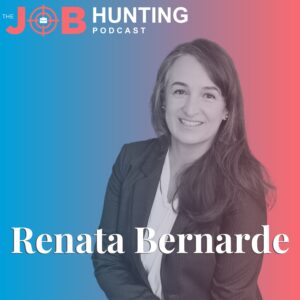
About the Host, Renata Bernarde
Hello, I’m Renata Bernarde, the Host of The Job Hunting Podcast. I’m also an executive coach, job hunting expert, and career strategist. I teach professionals (corporate, non-profit, and public) the steps and frameworks to help them find great jobs, change, and advance their careers with confidence and less stress.
If you are an ambitious professional who is keen to develop a robust career plan, if you are looking to find your next job or promotion, or if you want to keep a finger on the pulse of the job market so that when you are ready, and an opportunity arises, you can hit the ground running, then this podcast is for you.
Resources Mentioned in This Episode
Timestamps to Guide Your Listening
- 00:00 The Importance of LinkedIn for Professionals
- 06:28 Utilizing the Featured Section
- 09:43 Choosing the Right Skills
- 16:06 Crafting Your About Section
- 22:24 Why Recruiters Aren’t Finding You
- 27:47 Positioning for Future Opportunities
Transcript
Today I want to talk about LinkedIn again, but not in the usual way. This is not an episode about hacks. It’s not an episode about beating the algorithm.
And it’s definitely not an episode about turning you into a full-time LinkedIn content creator. Because most of my clients don’t want that. They are experienced professionals, they are executives, senior managers, consultants, board directors, specialists and leaders,
and many of them have built careers over twenty, thirty years and they are not short on experience. They are not short on capability, they’re short on time.
they have often had one problem. Their LinkedIn profile does not show to the market who they are now and what they’re known for and where they’re going next. And that really matters because before someone speaks to you, they may look you up on LinkedIn. Before a recruiter contacts you, they may find you on LinkedIn and do a search. Before a hiring manager decides whether to interview you, they may check your profile.
Even before someone refers you, they may look you up on LinkedIn and ask themselves, can I confidently introduce this person?
That is why LinkedIn matters. Not because it’s fashionable, not because everyone says you should be active there, but because whether you like it or not, LinkedIn has become part of the professional trust system. Today I want to share the seven LinkedIn questions my clients ask me most often. I will count them down from number seven to number one, and number one is the question I hear all the time.
And it is the one that sits underneath every LinkedIn audit that I do. So let’s begin.
Alright, beginning with question number seven: what should I post on LinkedIn? This is a question that clients ask me when they know they should be more visible, but they feel super uncomfortable being being visible. And I understand that many experienced professionals did not build their careers by posting online. You know, I’m a generation X. I find it super awkward to be on LinkedIn as often as I am. But remember, I’m a career.
coach seeking client. So I have to post more than my usual client who is a corporate professional with a full time job.
But we built our careers by doing the work, didn’t we? We delivered on things, on projects, on leading teams, on managing crises and chairing meetings and building relationships, all of that. So we did not need to write posts about every thought we’ve had before breakfast. So when we hear that LinkedIn matters, we often feel really resistant.
And my clients say things to me like I don’t want to sound self promotional, I don’t know what to say, I’m not looking to become an influencer, I don’t want my employer to know that I’m job hunting, that’s very common.
and I don’t want to post something and not have no one respond to it. So all of that is very understandable. But here is the shift I want you to make.
Posting on LinkedIn is not about performing. It’s about signaling. It’s about signaling what you care about, what you understand. You are signaling the problems you can solve and you can help a new employer solve. You are signaling what you are still actively doing and relevant for and the thoughts and ideas you had about your your
area of expertise. And
you are still engaged in your profession. You don’t you do not need to share everything, you don’t need to post every day. You actually shouldn’t, if you are like many of my clients. And you do not need to turn your career into content. For many professionals a better starting point is to simply become visible through a thoughtful engagement process. For example, commenting on other people’s posts from the same industry as yours.
Sharing a useful article with a short reflection, writing about a trend that you are noticing, sharing a lesson that you learned in the field without breaching any confidentiality issues. So this could be from a previous work experience, this could be from attending a conference, from gaining a certification.
supporting other people in your network with nurturing comments when they achieve a milestone and get a job or leave a job. The purpose is not to become viral. The purpose is not
necessarily engagement, it’s reputation, right? So the purpose is to become easier to remember because when people remember you, they are more likely to refer you, to introduce you, to recommend you, or think of you when they have an opportunity coming up.
So if you are wondering what to post, start with these questions. What do you read? what are you interested
What do you want to be known for as well? And what do you want to announce? Not what do you want to sell, but what do you want to be known for? That’s the difference. That is where LinkedIn activity should begin.
Okay, next question. Number six. What should I include in the featured section of my LinkedIn? The featured section is one of the most underutilized
parts of LinkedIn. I think it’s a really important one because it really does sit right at the top. And I think that happens, you know, the the underutilization of it because many people don’t know what to do with it and what it’s meant to do for you. They either ignore it completely and don’t even have featured boxes on their profiles or they add something random and forget about it.
But the featured section can be very useful. Think of it as your proof section. It is where you can show evidence of your expertise without making someone scroll through the entire profile.
For some of my clients, that might be a media article that they wrote or they were quoted. For others, it might be a podcast interview where they were a guest, a report that they wrote or again they were quoted, a presentation that’s publicly available. There are several ways of doing this. But here’s the important part: the featured section should support where you are going next. If you’re trying to move into board roles,
For example, featured content that supports your governance and strategy and risk or sector experience is important.
If you’re positioning yourself as a transformation leader, feature something that shows complexity, change, delivery, or leadership through uncertainty. If you are a consultant, then feature something that demonstrates your thinking and your credibility, like an article that you have written or a report. If you are a speaker or a facilitator, then feature a video or an event page.
is not what can I put here, the better question is what would make someone trust me faster.
That is what belongs in the featured section. And please don’t overload it. Three strong items are usually better than ten disconnected ones. You want the reader to understand your value quickly. Too much information can create confusion, and confusion is the enemy of opportunity of everything that you’re trying to do with LinkedIn.
Alright, number five, which LinkedIn skills should I add?
The skills section does not feel exciting. It I know that most people scroll past it, and that’s fine, and they should. Many people filled it with skills from years ago and they have not looked at it since. But the skills section still matters. It matters because it gives LinkedIn, the platform, more information about how to categorize you with all the other people that exist on LinkedIn. It matters.
because recruiters may still search for specific skills when they’re looking for people. And it matters because skills are attached to jobs, to job ads and candidate matching.
And it matters also because it reinforces your professional positioning. The mistake I see is that many senior professionals list skills that are either too generic, like leadership, or too outdated. They have things like communication, teamwork, Microsoft Office, Excel, customer service, or leadership. now there’s nothing wrong with those skills, but if you’re
Applying for executive roles, senior management roles, specialist roles, consulting roles, etc. Those words may not be enough for people to understand you. Your skills need to match the level and direction that your career has taken now. If you want to be found for let’s say transformation roles again, your skills should reflect transformation, change program delivery, operating models, stakeholder engagement.
business improvement and so on. If you want board roles, your skills need to reflect governance, risk, compliance, audit, sector experience. And if you are looking for executive leadership roles, your skills should reflect the scale of your work.
PL, people leadership, strategy and execution, growth, mergers and acquisitions, and so forth. This is where many people go wrong. They list what they have done, but LinkedIn needs to support what they want to be found for, right? What you want to be found for. So my simple tip for skills is this: look at five roles you would genuinely consider. Study the language in those job ads.
Look for the skills that are listed in the job ads and then ask yourself which of these skills do I genuinely have in my background and are they on my LinkedIn profile? Which ones are central to my next move? Which ones should be visible on my LinkedIn profile right now? That is a good starting point. But but don’t turn your profile into a keyword dump. Keywords help you get found.
Clarity helps people understand you, okay? And you will need both.
Number four.
Is my LinkedIn profile aligned with my resume or my CV? Well, this question comes up often, and it is more important than many people realize because your CV and your LinkedIn profile do not need to be identical. In fact, they shouldn’t be, but your CV is usually tailored to a specific role whereas your LinkedIn profile is broader. It needs to position you for the type of opportunities that you want to attract.
But they must tell the same professional story and have a through line between the two of them. And this is where I see problems. A client CV says they are a transformation executive, for example example, but their LinkedIn profile does not. It reads more like, let’s say, operations.
Their CV includes board roles and awards and volunteering media mentions or advisory work, and then I go to their LinkedIn and there’s nothing there. So their C V has strong achievements, but the LinkedIn doesn’t. Their C V has up been updated recently, but the LinkedIn was updated maybe five years ago. And this creates doubt and discrepancies. And when somebody
Is reviewing you quickly, that doubt can cost you a lot. The reader may not consciously think there is a mismatch, but they may feel that something is unclear, and unclear profiles are easier to overlook.
So here’s what I want you to do. I want you to open your resume or CV and your LinkedIn profile side by side and ask yourself these three questions. What is missing from my LinkedIn and what is missing from my resume? What is inconsistent between the two? And what no longer reflects where I am going? That exercise can be really important because sometimes the issue is not that you lack experience, the issue is that you’re
experience has not been properly translated in your documentation and that is a very different problem.
Number three, what should my about section be about? This is the question that often brings up the most discomfort because writing your about section can feel strange, especially if you are experienced. You have too much to include, you don’t want to sound arrogant, you don’t want to sound like everyone else, or you don’t want people to think you’re looking for work. Sometimes that is an issue with the about.
section and you don’t want to reduce your career to a few paragraphs and that’s why sometimes some about sections are too long or they don’t exist at all. And people are not usually sure how to explain your next move or sh should it be in the about section. And it the answer is sometimes yes and sometimes no. It really depends. So many people end up with
one of these two problems. They write an about section that is too short, that says nothing at all, or they write a long biography that starts decades ago and tries to explain everything. So neither of those is ideal. Your about section is not your life story, not your resume or cova letter. It’s a positioning section. It should help the reader understand who you are professionally, what you are known for and
Where your value sits. For experienced professionals, which is most of my clients, I usually want the about section to do a few things for them. It needs to give people context. What level do you operate? What sectors or environments do you understand? What kinds of problems do you solve? It needs to show credibility.
And what have you led and improved and changed? Usually we use those action verbs into dot points in a good about section. And it needs to create direction. What kind of work
Role, sector, or contribution make sense for you. That does not mean that you need to say, I’m actively looking for a job. Most of the time, my clients don’t have that information in their about section. You can be more subtle than that. You your profile should not leave the reader guessing, though. There is a simple way to think about this. Your about section should answer this question for the reader: why should the right person keep reading this?
profile right scroll down to the profile and read more
And the answer is not everyone, right? Not everyone should be reading your profile, but the right people should be reading your your profile. Those that are recruiting for roles that you’re interested in, the hiring manager that might be looking for somebody like you and so forth, a potential client, right? So that is a really important way of thinking about the entirety of your LinkedIn profile.
When that person, that special person, lands on your profile, your about section should help them quickly understand the value that you add, right? So make it readable. Short paragraphs, clear language, dot points, strong nouns and verbs. I really like action verbs, less corporate language. So many times I’m trying to make my clients’ about sections.
less generic and take away a lot of the jargons that we tend to utilize for those types of drafts and and statements. It’s important to be more specific. A profile that’s easy to read and easy to remember is usually more specific.
Question number two.
What should my LinkedIn headline say? This is probably the most common tactical question that I receive, and I understand why. The headline is very visible. It’s visible everywhere. It appears when you comment on other people’s posts, it appears when you post, it appears in search results, it appears when somebody is deciding whether to click on your profile or not.
And it’s the first thing together with your photo and the banner that people see. So your headline really truly matters. The biggest mistake people make is using only their job title and employer. I mean there are cases when that’s probably the only thing you should have, but most of the time
it’s best to include a few more things. So for example, if you are a general manager at X, Y, Z company, that is accurate. But it does not tell me enough. General manager of what? Right? So it’s very generic. It does not tell me your core expertise. It does not tell me the type of work you want to be known for.
And it doesn’t contain any keywords to support recruiters that are searching for people on LinkedIn. And headlines are important in terms of keyword searchability. If your current title does not reflect your next move, it may hold you back. That’s the other thing of having just the title as your headline.
The second mistake I see with headlines is going too far in the other direction. So some headlines become packed with keywords that lose meaning. You see a long list of words separated by those vertical lines, and by the end you still don’t know what the person actually does. I think that a strong headline needs to be a balance between those two. It should be searchable but still human. It should include your current and most recent professional identity.
It should include the keywords that really truly matter for your target roles. And it should make sense to the people you want to reach. So, for example, depending on the client, a headline might include words like transformation, strategy, operations, commercial leadership, governance, risk, and policy, stakeholder engagement, change. Not all of them, by the way, I’m just giving some examples.
digital, healthcare, education, you know, in terms of sectors that they may have worked for, infrastructure, government. But the right words, they depend on the person. The CFO, a policy executive, and a transformation leader, should not have the same headline.
Right? This is why generic headline templates can only take you so far. And the better question is what should someone understand about you in these three seconds that takes them to read the headline? That is the job of your headline.
The number one most popular question people ask me when they’re doing LinkedIn audits or when they’re being coached by me is this. Why are recruiters not finding me on LinkedIn? This is the number one question, and it is the one that sits underneath everything else that I do on LinkedIn. And when clients ask this question, there is often a frustration behind it.
Is it a question of you not having the right experience? Is it a question of having worked for organizations that are not being considered as the right pipeline for for future jobs?
and you have done complex work and you have been open to opportunities on LinkedIn. So why are are you not being contacted? When I say open to opportunities is you probably know this, you can be open to opportunities publicly with the green banner or open to opportunities recruiters only, which means the banner is not going to show on your profile picture but recruiters platform on LinkedIn. R LinkedIn has a recruiters platform,
And there is this expectation that if you are available, that you will be contacted should an opportunity arise. And the answer is often uncomfortable. Being good at your job does not automatically make you easy to find. LinkedIn is not reading your career the way a human would in a deep conversation that you’re you would be having with somebody. Recruiters, when they search using keywords like job titles and industry.
location, skills, skills like I said before.
Sometimes it’s functional expertise or sector information. They are using those as signals and those signals might be missing or unclear or outdated or maybe inconsistent in your profile. You may not appear in the right searches, or you may appear, but the recruiter may not understand your fit quickly enough when they land on your profile. And that’s a real issue, and this is why the LinkedIn
As a service that I provide is so important for my clients. You don’t just need to be found, you need to be understood. You need to be understood quickly, by the way. This is where many experienced professionals struggle with LinkedIn. Their careers are so rich, their profiles are vague. There’s a discrepancy there. Their experience is impressive, but the language that they’re using is too broad.
Their value is clear in conversations, but not clear on paper or on a profile like LinkedIn.
Your past is visible, but sometimes the future direction that you want to take is not, if you’re sort of keen to change that. So when I review a LinkedIn profile, I’m not just asking, is this well written? Because many times it is. I think especially these days with the help of AI, there’s a lot of well-written profiles out there. What I am usually asking is, can the right people find this person? And when they find it, can they understand this person?
quickly by reading their profile and can they see the level at which this person operates?
And then connect this profile to the roles this person wants next. Right? So that’s about trust and about credibility signaling. and it’s about having the right keywords, but without feeling like the profile was written by a machine, right? That’s the real work of frankly the LinkedIn audit that I do. And of course, you can DIY that as well. That’s why I’m doing this podcast for you. So
It’s an outcome of an alignment of things, right? So your headline, your about section, the experience section, the skills, the location, the industry that you choose, open-to-work job titles that you add to your profile, the featured section, and the activity in general. They all need to point in the same direction. If I see a discrepancy between those sections, that’s where the recommendations come in.
and when they don’t aligned, your profile becomes harder to find and harder to understand. So if you’re wondering why recruiters are not finding you, start with with this question. What would a recruiter search if they were looking for somebody like you for a role like the one that you want next?
Right, not the role that you had 10 years ago. Not every role you could possibly do, but the role that you want next. That is the important question that can really change your entire profile. So, those are the seven LinkedIn questions I hear most often from my clients, either private coaching clients or in consultations, and of course during my LinkedIn audits.
These questions, I am assuming if you’re still listening, resonated with you. And underneath all of these seven questions and others that I won’t have time to discuss today, is this bigger one. Am I positioned clearly for what I want to do next? That is what LinkedIn is really helpful and really good at. And it is not about looking busy on LinkedIn, it’s not about posting daily, it’s not about copying
What everyone else is doing with their headlines or whatever. It’s about making it easier for the right people to understand your value. For the experienced professionals, that matters even more than for other people that are on LinkedIn, like myself, you know, trying to find clients. Because for experienced professionals in the corporate world, your career was really complex. You may have worked across
many different issues and sectors and expertise. You may have held different types of leadership roles, moving from one sector to another, one industry to another.
And that complexity is real and hard to qualify and to express. But complexity should not become confusion. Your job is not to tell people everything, your job is to help them understand what matters about your career. So here’s what I want you to do after this episode: open your LinkedIn profile.
Look at your headline, look at your about section, all with fresh eyes, you know, your skills. Do you have a featured section? And ask yourself if someone found my profile today, would they understand what I want to be known for? Would they understand the level I operate? Would they understand
what I want to do next. And the answer to any of these questions is no, that is your starting point. And if you need help with this, this is exactly the type of work that I love doing for my clients.
Like I said, through LinkedIn audits, private coaching, and my career programs, there is a LinkedIn webinar in all of my courses. You can find more information at renatabernarde.com. That’s R-E-N-A-T-A-B-E-R-N-A-R-D-E.com. Thank you so much for listening to the Job Hunting podcast. Please make sure that you’re subscribed and I hope that you enjoy the newsletters as well.
newsletters just add a little bit more content and humph and strategy and reflections from me to add value to your job search and your career planning and keeping touch I’ll see you next time. Bye.
Related Posts
Why Good Work No Longer Speaks For Itself
The 7 Career Questions My Clients Ask Most
Five Things I Would Not Do If I Were Job Hunting

How Headhunters Really Work
Behind the Hiring Curtain: What’s Really Happening