



A professional can spend 25 years becoming good at their work and still struggle to explain that work in a job interview. Asked about a difficult decision, they begin with the organizational history, describe the stakeholders, explain the constraints, and eventually reach the decision itself. By then, the interviewer may have stopped following. The candidate leaves knowing they had more to offer than the conversation revealed.
I see versions of this problem in my coaching practice. Experienced professionals often assume that preparation means finding more examples, anticipating more questions, and making sure nothing important is left out. Yet the difficulty is frequently one of selection: deciding what another person needs to understand, and making that understanding possible within a few minutes. More experience provides more material, but it does not automatically provide a clearer answer.
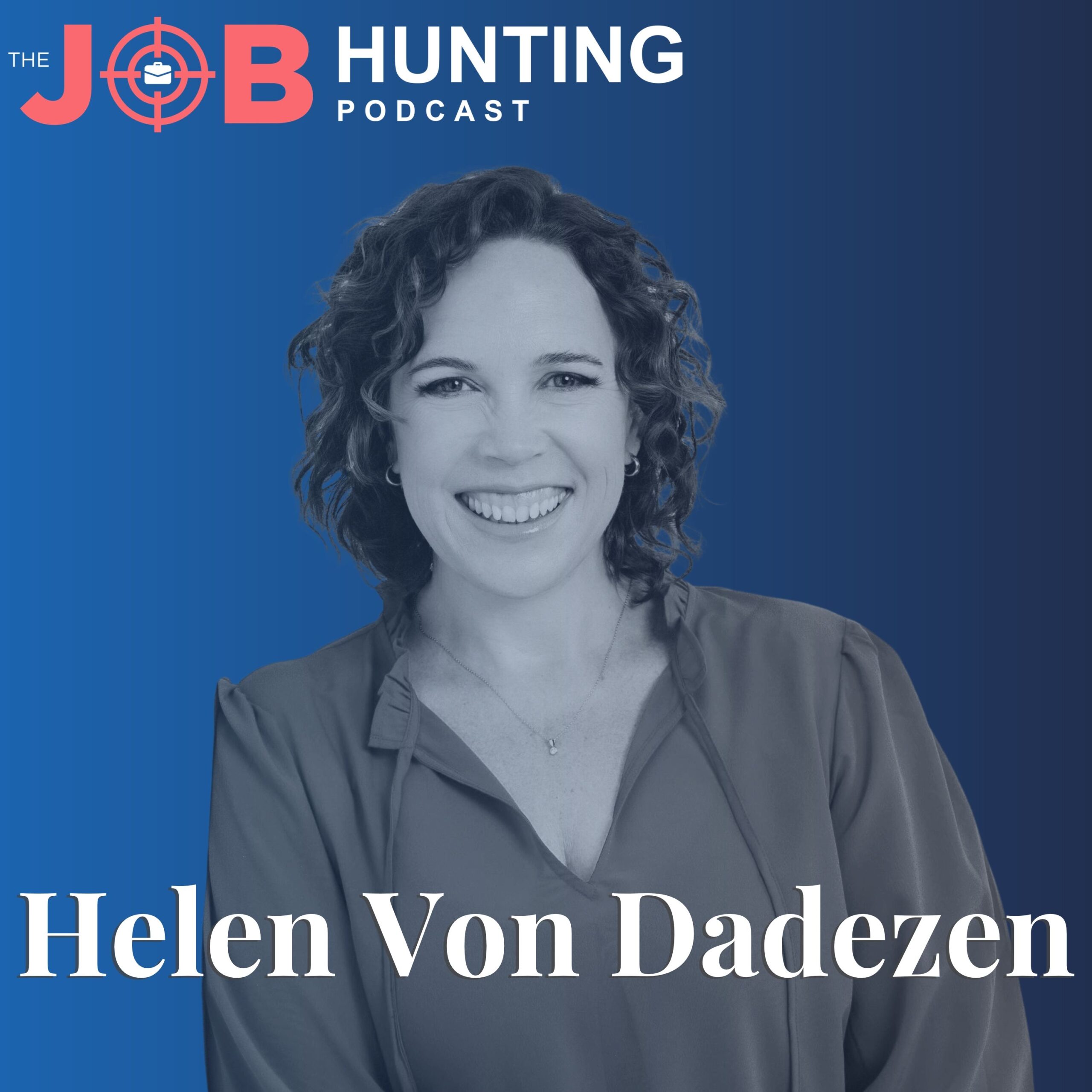
This was the challenge I wanted to explore with communication and vocal coach Helen von Dadelszen, whose background includes HR and recruitment. Our conversation raised a question that matters to candidates and employers alike: how much of what we call competence in an interview is actually the ability to communicate competence? Improving that ability can help someone progress. Confusing it with the whole of their professional value can lead employers to overlook capable people.
For an experienced professional, the challenge is rarely a shortage of career history. It is that the history makes sense to them in ways it cannot yet make sense to a stranger. They know why a project was politically difficult, why a modest improvement represented a substantial achievement, and why a decision required courage. An interviewer has none of that context unless the candidate supplies it.
According to Helen, it all starts with the audience: what they know, what they need, and what they should understand by the end of the answer. That changes the task from recounting a career to selecting evidence for a particular conversation. As she put it, “communication is a skill that we can build,” while years of experience cannot simply be manufactured. The opportunity is to make existing expertise easier for another person to recognize.
In my work with clients, I often bring their attention back to the problem an employer is hiring someone to solve. An answer about leading change needs to make the candidate’s judgment visible: what they identified, what they decided, how they brought people with them, and what happened. Detailed organizational background matters only where it helps explain those choices. Including every complication can undermine the very contribution the candidate wants the panel to appreciate.
Consider a finance leader asked about a troubled transformation. A chronological account might take several minutes to establish the situation before revealing what the leader did. An illustrative opening such as, “I inherited a transformation that had lost the confidence of the executive team, and my first decision was to reset the scope before committing more money,” gives the interviewer something to follow immediately. The detail can then explain the judgment rather than postpone it.
There is a reason a strong written application does not guarantee a strong interview. In a 2015 study published in Psychological Science, Juliana Schroeder and Nicholas Epley found that evaluators rated job candidates as more competent, thoughtful, and intelligent when they heard their pitches than when they read them. The experiments included professional recruiters, and adding a voice to written pitches also improved evaluations. The finding concerns perceptions, not proof of superior ability, but it demonstrates that the medium carries information beyond the words themselves.
Helen illustrated this with a simple mismatch: saying that you are happy to be somewhere in a flat, disengaged voice. Candidates can produce a similar effect when they have carefully prepared a positive explanation for leaving a role, yet deliver it with the tension or frustration they still associate with the experience. The words may be appropriate while the conversation remains difficult to receive. A script alone will not reveal that problem.
I had been discussing exactly this challenge with a client before my conversation with Helen. Understanding that anger should not dominate an explanation for leaving a job is different from being ready to discuss the departure calmly. I would not tell someone to suppress a difficult experience and hope it stays hidden. I would help them work through what happened, decide what is relevant to disclose, and practice an answer they can stand behind.
Preparation also includes the conditions in which a voice reaches the listener. Researchers in a 2025 Yale study played listeners two versions of the same recordings: one with clear audio and another altered to sound as though it came through a poor-quality microphone. Even though listeners could understand the words in both versions, they judged speakers less favorably when the audio sounded worse. In an experiment involving a job application pitch, listeners were less inclined to hire the candidate whose recording had poorer sound quality. Before a video interview, it is worth making a test call and asking someone how clearly they can hear you, rather than checking only how you look on screen.
Recording yourself can be useful, although it requires a better question than whether you like how you look or sound. The useful test is whether a listener can identify your point, understand your contribution, and follow your reasoning. Ask a trusted person to tell you what they remember from an answer. If they remember the complicated circumstances but cannot explain your decision, the answer needs more work.
Helen suggests a structure she calls PREP: point, rationale, example, and point again. It gives an answer a clear beginning and ending while leaving room for explanation. For a career break, that could mean stating the reason directly, providing the necessary context, discussing something relevant learned during that period, and returning briefly to the original point. It should help organize a response rather than force every question into an identical formula.
The same restraint applies to delivery. Helen described using small reminders to interrupt habits, such as a note to slow down, instead of attempting a complete transformation overnight. I find that a useful approach because candidates already have enough to think about during an interview. Working on one observable behavior is more manageable than monitoring every movement, pause, and expression.
There is also a limit to what someone should be asked to change. A more expressive face, stronger eye contact, or a more energetic delivery may feel natural and helpful to one person and exhausting to another. Cultural differences and neurodivergence make universal prescriptions particularly questionable. The purpose of preparation should be to help someone communicate their thinking with less friction while retaining a way of speaking and working they can sustain.
The obligation to communicate clearly cannot become an excuse for every judgment an interviewer makes. A 2025 meta-analysis of accent bias in employment interviews found that interviewees with standard accents were consistently favored over those with nonstandard accents. Bias was strongly associated with stereotypes about competence and, to a lesser extent, warmth; it was not significantly moderated by perceived comprehensibility. The distinction matters because a person can be understood and still be judged less favorably.
This is where I would qualify advice about matching expectations of executive presence. Helping someone articulate a decision is useful coaching. Treating a familiar accent, a particular personality, or an interviewer’s preferred manner as evidence of leadership is a much weaker proposition. A candidate should not have to interpret every rejection as proof that their communication needs repair.
Helen’s description of executive presence as the “wrapping” around professional substance captures part of this problem. Presentation can help others recognize what someone brings, but it cannot supply judgment or experience that is absent. Equally, an unfamiliar style does not mean the substance is missing. Employers need to be as interested in what lies beneath a polished delivery as they are in whether a quieter candidate could explain something more clearly.
I also think we need care with the reassurance that a biased employer is simply the wrong employer. That may be true, but people looking for work have financial obligations and varying room to maneuver. Recognizing bias should help them interpret an experience without absorbing it as a verdict on their worth. It should also inform their decisions about an organization, alongside the practical realities of needing an income.
If communication and competence are different, hiring processes need to assess both deliberately. The CIPD’s guidance on selection methods recommends structured interviews with predefined questions and consistent scoring criteria to reduce bias. It also recommends that interviewers score responses independently before discussing candidates together, and that interview evidence be supported by other assessment information where possible. These practices give employers a firmer basis for comparison than a shared impression that someone did or did not seem senior enough.
Communication can be a legitimate requirement of a senior role. A leader may need to explain financial risk to a board, deliver difficult news, or resolve competing priorities across teams. Employers should specify those demands and assess them through relevant examples or tasks. That makes it possible to distinguish an inability to explain a consequential decision from a delivery style that simply differs from the panel’s preferences.
For candidates, the most useful preparation begins with identifying the judgment they want a listener to understand. Choose an example, explain it aloud, and ask what another person actually heard. Refine the answer until your contribution is visible without requiring a tour of your entire career. That practice can serve an interview, a promotion discussion, or the next meeting in which an important point needs to be heard.
A long career should not have to fit into a few minutes, but a few minutes can reveal how someone thinks. Candidates deserve support in making that possible, and employers have a responsibility to recognize the limits of the impressions they form. Better conversations require effort on both sides. The aim is for experience to be understood well enough that a decision can rest on more than the performance of an interview.

Hello, I’m Renata Bernarde, the Host of The Job Hunting Podcast. I’m also an executive coach, job hunting expert, and career strategist. I teach professionals (corporate, non-profit, and public) the steps and frameworks to help them find great jobs, change, and advance their careers with confidence and less stress.
If you are an ambitious professional who is keen to develop a robust career plan, if you are looking to find your next job or promotion, or if you want to keep a finger on the pulse of the job market so that when you are ready, and an opportunity arises, you can hit the ground running, then this podcast is for you.
Renata Bernarde
Helen, the reason why I really wanted to have you on the podcast today is your background. You have worked in HR and recruitment. So now that you are a communication and vocal coach, you have this great background and current experience that is so important for my podcast audience. So what I want to do with you today is really explore why experienced professionals can struggle so much to convey the value of their experience in interview conversations, in networking conversations. It’s something that a lot of people struggle with.
So when an experienced candidate sounds less convincing on their résumé or when they’re talking, what do you listen for first? The answer itself, or is it the way that it’s structured or how it’s delivered? What do you think people are paying attention to when a job candidate is presenting an application?
Helen von Dadelszen
So I think it’s helpful to separate listening out for competence and experience versus communication skills. Because what I see is so many people are excellent at their job. Most people are very good, but very few people have actually been taught how to communicate at all. And so that can really put them at a disadvantage when they’re talking about their work. It’s not that they don’t have the experience, but they just don’t have the skills to talk about it in an interesting, engaging, and audience-centric way.
And I think that’s okay because communication is a skill that we can build. But the 20 years of experience is something you can’t fake. So yes, it puts you at a disadvantage if you haven’t worked on your communication skills, but as a recruiter or a hiring manager, I would try to separate that, the competence, and then is it just communication skills? Because if they’ve got the experience and the technical knowledge, we can work with that. We can still build their communication skills. It takes time, but it’s possible.
Renata Bernarde
Yeah, that is important because what you’re saying here is the recruiter needs to do the separation, right? And then if all recruiters thought like that, wouldn’t that be great? Yes.
Helen von Dadelszen
Well, this is what candidates need to remember: we all come with our biases and our expectations. If you look senior on paper, but you’re not speaking in a way that they would expect, then I would say that’s something you could work on. And it’s something you can work on before you get to an interview. You know, today you can start working on your communication skills, actually looking at what’s working for you, what’s not working for you, and how you can sort of bridge that gap before you get into the interview.
Renata Bernarde
I agree. One thing that you mentioned before about the years of experience, one thing that I’ve noticed is how hard it is for experienced professionals who have done so much work and complex work. They feel that it’s hard for them to fit neatly into a two- or three-minute answer at a job interview. They feel like there’s too much information there for them to compress. So how do they simplify it without diminishing their contribution or making it smaller than it is?
Helen von Dadelszen
There are a couple of different things you can do. What I like to start with is thinking about who are you speaking to, where are they starting from? So what do they know? What do they believe? What do they need? What do they want? Rather than taking it from your own point of view, which means that you might very quickly lose them. So where are they starting from? And then at the end of your answer, at the end of your interaction, what do you want them to think, feel or do?
And your job as a communicator is to filter all the knowledge that you have in your head for the audience to take them on that journey to hopefully get to that transformation of making them think, yeah, this person knows what they’re talking about. I feel like I could trust them. I think they’ll be a good leader. I will invite them for the next step in the conversation. It’s simple. But it does require practice as well because we’re so egotistical, right? It’s difficult to think from the standpoint of someone else.
And that is what causes the problems: we want to give everything. Because we think that if we can sort of download our twenty years of experience into the answer, that’s going to show. But in fact, it’s not. They’ve already seen your CV usually. And they’re asking a specific question to tease out how you communicate, but also how you see yourself, how you see the world, how you would then work in another environment. So it’s a lot of filtering and really taking it from their point of view.
Renata Bernarde
Yes. One thing that I have often discussed with other guests and I talk to my clients as well is the external focus versus the internal focus: getting outside of your own head and your own career trajectory. Sometimes we want to deliver that in a linear fashion, when we’re answering a question, rather than focusing on what it is that the person in front of you is trying to solve by hiring someone and then, trying to make your answers address that focus rather than your need to convey everything that you’ve done in your career with the hope that something might stick.
Helen von Dadelszen
Yeah. That’s it. And that’s what I call audience centricity. So, thinking about your audience, who you’re speaking to, what do they need? What do they want? Rather than take it from your own point of view. You need to step into their shoes essentially, to understand where they’re coming from. And it can be difficult to do because we’re stressed about the situation, it might be high stakes, we want to do a good job. So there’s a lot happening for us. And so it’s normal to start thinking about “Me, how I look, how I sound, am I going to find my words, and do they like me?” All of that.
But if we can turn it around and say, This is a conversation, what do they need? How do I make them feel good about my experience, about the answer? Without tricking them, but really taking it from their point of view.
Renata Bernarde
Yes. I was with a client just before you and it’s interesting because you just said, about it being simple, but it doesn’t mean it’s easy, right, Helen? It’s not easy. It’s simple but it’s not easy. And this next question that I have for you has to do with my conversation with this client because I’m sure the client understands that when they’re answering a question, for example, why did you leave your job? You know? That they cannot be emotional about it, that they cannot be angry about it.
And they were like, of course, of course. And I know that they know, but the difficulty is your tone and your body language not really lining up with what’s coming out of your mouth. So that voice and the pace, when you feel that you have to prove something to someone else in front of you in the room, that is I think the hard thing that you need to prep for. Would you agree?
Helen von Dadelszen
Yeah. Absolutely. You can have the best answer, find all the right words in all the right places, but then if you say it in a way that’s incongruent, that doesn’t match with the meaning, that can ruin everything. You know, a simple way of illustrating this is saying, I’m so happy to be here today. You know, and you’ve got a flat, monotonous tone, doesn’t sound like I’m happy at all, especially compared to how I usually speak. So this is something that a lot of people think about very late in the process, if at all.
But in fact, it’s important to match the tone, your body language, the whole package with the words that you’re saying and how you want to be perceived. Right? And this doesn’t happen magically overnight. We actually have to watch ourselves, get feedback, and see if we are matching the energy and the sense of the words with everything else. Again, it’s a simple thing to do, but first you have to become aware. And I remember a couple of weeks ago I was working with a client, and we were working on how she’s positioning herself in her organization as a little bit more senior.
She wants to be taken a bit more seriously. She’s been there for a long time now. And one of the things we noticed in our conversation was that when she’s talking to someone, she does not react with her face. And she wants to be perceived as someone who’s warm and encouraging because that’s who she is. Yet over time she’s created this deadpan face. And when I showed her what she was doing just during our conversation, she was horrified. She thought, “No, I can’t be.” There was no smiling, no nodding, no reacting as the other person was speaking.
And that goes against the perception she was trying to portray. And so it’s really important, not only when you’re speaking, but when you’re not speaking, that you’re aware of what you’re doing with your body and your face, because we’re sending out signals constantly to other humans. And as the receiver, we are subconsciously picking up on all of these cues. Am I safe? Is there a problem here? You know, we’re constantly searching for danger. And so if you’re sending out the wrong signals, that can feel very uncomfortable.
And I think this sometimes comes down to your feeling of, “I just didn’t really like them.” You know, you can’t put your finger on it, but there was something that didn’t gel. And that’s usually a matter of a lack of congruence between who they are, what they’re saying, and how they’re then showing up with their voice, their body, their face and all of that. So it’s a whole package that we have to think of.
Renata Bernarde
Yeah. I find this fascinating but also find it really hard to help clients with. There’s quite a good book for people to read about this. It’s from Malcolm Gladwell. I’ll put the link below if people are interested. It it has to do with what you just said, the mixed signals that you send, by having a deadpan face instead of a face that shows emotion. And sometimes it can be because you are in fight or flight during an interview, which can have that effect on you.
But it could also be, you know, sometimes cultural or related to ethnicity and you don’t show as much emotion on your face. Sometimes it can be neurodivergence that will affect that. How do you help a client, Helen, overcome this? Should they, for example, if they are neurodiverse, should they let the recruitment panel know? Is that better for them in terms of how they will come across in an interview?
Helen von Dadelszen
I don’t think there’s any hard and fast rule. I think neurodivergence has so many forms and meanings and it can also be a disadvantage, depending on who you want to work with and the culture and the openness of the person in front of you. So I wouldn’t say it’s black and white. I would say it’s really important for you to be you and to be clear about the value that you’re bringing, the values you have, what you’re looking for, that is the most important thing.
And if you show up with that, and you approach the interview like a conversation, which it is, it’s a two-way interview, it’s not just them interviewing you, interrogating you, and you show up as you are, the best version of you, obviously, I really hope and believe that the right employer will find that value in you and appreciate that diversity, that different way of being and see through any of the labels and things like that. Because it’s in diversity that businesses grow and if you, for example, were to mask or hide anything, or really force a way of being during an interview and then get hired, you might be very happy because you’ve got the job.
It might be the job of your dreams. But a month, a year down the line, there will be a clash because the expectations were not true. You were presenting in a way that is not true to you. It’s difficult to sustain and that will eventually come out and then probably there’ll be difficulties. So yes, you want to come across in the best possible light, your best version of you in the interview. However, it still needs to be you because otherwise you cannot sustain that and that is a recipe for disaster in the long term.
Renata Bernarde
Got it. Going back to that client with the deadpan face, what did she do? What did you both do that helped her present in future interviews and conversations?
Helen von Dadelszen
What you need to know is that communication is a habit that we create over time. And we can get stuck and have different ways of communicating which are not necessarily helpful, like she did. And she did it probably because she was protecting herself from potentially a difficult situation. And over time, this is what she built up as sort of an armor where she didn’t react. The great thing is once you become aware of something that you’re doing that is not helping you, for example, if you speak too quickly, or if you mumble, or if you smile when you’re giving bad news, all of these things are just habits that you’ve created over consistent use.
And so as soon as you are aware and you identify that, then you can start looking for ways of breaking that habit and creating a new one. So every time she realizes, I haven’t smiled for a while, she smiles. Simple as that. We explored her facial expression. She can do them all perfectly well. She used to do them. In fact, when she’s talking to friends, she probably does use them. So it’s just you need to remind yourself to smile more often, right?
I have messages on my own screen, just slow down. Right? And I tell people, you prepare your notes, you have your little notebook, maybe going into an interview, write slow or an exclamation mark. Just that little reminder will help you break the automatic habit that you’ve created. I’m going to slow down this sentence. And then I’ll probably go fast again. But then at least you know, a ten percent change can make a huge difference. So it’s any little reminders that you can give yourself to work on that one thing.
That is the beginning of the change. You’re breaking the habit by creating a new one. And then over time, you realize, actually I don’t speed up anymore. Or actually, I can feel that I’m being much more reactive with my facial expressions.
Renata Bernarde
I love that. That’s great. I like the reminders. I think I need to do one for smile more. I was just watching one of my YouTube videos that’s coming out this week and I’m like, it’s forty minutes long and I hardly smiled. I was too serious. Yes.
Helen von Dadelszen
Because you were concentrating, right? You were concentrating on the person, and it was interesting. But for the other person it can feel like you’re serious or worried or not interested. So once you realize that, there are easy ways of changing it. So yeah, a little message on your screen or in your notebook can do wonders.
Renata Bernarde
I like that. And talking about those little messages and the type of people that are listening here today, it’s called The Job Hunting Podcast. So I assume that a lot of people listening, they have been laid off, their confidence may have taken a hit, and that adds to, the difficulties in communicating. What would you work on before asking them to prepare and rehearse for job interviews? What is it that you can do as a pre-work prior to preparing for interview questions?
Helen von Dadelszen
What I find to be the most valuable thing to do at that point is to look for the positives. Right? We have this negativity bias. As I already mentioned, even with our communication, we’re searching for danger. And when you’re laid off, it’s so easy to focus on the negative, right? Or when you read the job descriptions, you say, well, I don’t have this and this and this. So I would encourage people to create a bank of good examples. Remember that project you did brilliantly, that presentation you did well, or that meeting you ran well.
So start collecting those little successes in a notebook or electronically to help counteract the negativity bias that we all have which will help over time shift your mindset to finding the value in who you are and what you’ve done and what you can eventually give to another lucky company. So that’s probably the first thing. A lot of the work is not logistical, like the CV, the letters, and the networking. A lot of it is actually mindset. Who am I? What value do I have?
What do I want in a job? What do I want in a career? What are my next steps? What are my transferable skills? So collecting all of that requires time and a positive mindset. And I think that is probably the place that I would suggest people to start.
Renata Bernarde
You mentioned bias before, Helen, and my clients are looking for work. And they’re looking for work all over the world. So I have clients in Singapore, in New Zealand, in Australia, in the Emirates and Europe. My samples are small, of course, because we’re not talking about thousands of people. But I find that in general, they really struggle with recruiters’ biases. So they find that recruiters have biases. And in my experience, you’re in Europe, I find that European recruiters are the most difficult to work with in this respect.
It was a surprise to me. But I find that my clients in Europe really do struggle with how the recruiters want them to present. It’s interesting because we want people to be authentic and themselves and feel comfortable. You’ve just mentioned that. But the interviewer also has some expectations of what credibility looks like, what executive presence looks like. And it can be unfair. Having worked in HR and recruitment, challenge me if you believe I’m wrong on this, but where do we find the balance and is it unfair on the candidates?
Helen von Dadelszen
I think it is unfair on the candidates and I’ve definitely seen and witnessed a lot of that bias and I think it’s particularly strong in Europe because all the countries are so close by that they have created differences between them to make them feel safe and make them feel good. And so I was quite shocked actually when I came from New Zealand to Europe at how many racist comments in particular I heard, well, you know, they’re Portuguese. And I was like, I don’t know what that means.
I have no reference to what that could possibly mean, right? So I agree that there is a lot of bias out there. And we can’t change that. So indeed, your accent is going to have an impact on how people perceive you. If I speak like this with a French accent, you would probably think that I am not as competent as I am, right? So that’s with a French accent. Very strong, and I could be totally fluent, I could be top of my game, but if I speak like that, you will automatically think that I am less capable.
Now, if I speak with Received Pronunciation, you will think, she’s British, and therefore, we have all of these cultural biases that have lasted a long time, they’re slowly shifting because we’re hearing more voices and seeing more diversity, but they are very ingrained human elements. So, yes, there is interviewer bias. I don’t know what to do about that because it is beyond our control. I say that we can only control ourselves, how we prepare, how we react, and staying true to ourselves.
So it kind of comes back to the idea we were talking about with neurodivergence that if someone cannot see beyond that, if the company is biased against you because of your accent, because of your gender, whatever disability, whatever it is, in a way, I’d like to say that is their problem. And you don’t want to be working for them. Now, obviously, some people are really desperate for a job and they would put up with that. But I think that’s such a sad place that we’re living in if we have to bend and contort ourselves to all be the same just to get a job.
Because at the end of the day it is just a job. So I truly believe that if we are clear in who we are, the value that we give, the values we have, what we need from an employer, and from a career and from a job and from a boss, then we will find that. I really hope that for your listeners because I’ve been unemployed, it can be really tough. I’ve looked for many jobs and had many interviews over my career.
And it can be so disheartening and so frustrating. And when we talk about the biases, I probably saw that when I lived in Scotland when I first came to Europe. And I was desperately trying to find a recruitment job. And the feedback that I was getting was, but we think you’re going to go back to New Zealand. And I think that was just an excuse, really, because in the end, I’ve been here 24 years. So I never really went back. But it probably did play against me that I had my Kiwi accent, that I was from New Zealand, and had very little experience in Scotland or in the UK.
So I guess the point is this is a reality that we’re living in. It’s good to be aware of it, but it’s not all one sided. You don’t want to work for those people anyway. And I really believe there are enough companies and enough good people out there who see the diversity, who can see beyond all of our accents and color of our skin and things to find the nuggets of great people who can really contribute in a beautiful way to the organization.
Renata Bernarde
I agree. Yeah. The whole work that I do is also about controlling the controllables and not worrying about what you cannot control. And there is a freedom and it’s for your personal well-being as well in terms of, you know, how you go through the job search as well, that you understand that there are things that you really can have control over and if you understand that, focus on those things, and hone those skills then you have a better chance of converting from job application to interview to job offer than worrying about the things you cannot control.
So that is a great message. Thanks, Helen. What assumptions do you think people have about executive presence that you would like to challenge? Because we’ve been talking here about the importance of embracing your, how can I put it?
Helen von Dadelszen
Uniqueness.
Renata Bernarde
Your personality, your capabilities, your skills, the experiences that you’re bringing, but also developing your communication skills so that you can better showcase them. Is that enough for you to develop a unique executive presence?
Helen von Dadelszen
So I think that executive presence again comes with different flavors, different colors. And what we think of naturally as executive presence might be very difficult for some of us to attain and might feel untrue. And so I can teach people better ways to use their voice, even their language, their body language, the face, whatever it is, but it’s no substitute for knowing who you are, the value that you’re bringing, and the expertise that you’re giving. So I like to think of it as the core is who I am and all the content.
And then the wrapping is the executive presence. That’s the performance part. So yes, you can just have the wrapping, but then there’s nothing, the gift is not there. So I would always prefer to work on being able to express yourself in a way that is clear and engaging for the audience and less on the executive presence because, as I said, that is something you can work on and honestly, communication is lifelong work. We can constantly evolve and improve and find new ways of expressing ourselves.
And sometimes I struggle with the concept of executive presence because it feels a little bit empty. But it is really the wrapping on top. And if there’s nothing at the core, then you’ve got nothing to sell, nothing to give.
Renata Bernarde
Yeah, that’s a very good analogy. Okay, so let’s change a little bit to talk about people that need to explain themselves and communicate when they have had an unconventional career or a career change. What must an interviewer understand in the first minute or so before the detail will make sense to them? How can you communicate that well without waffling and without getting the interviewer more confused about the career change or an unconventional career?
Helen von Dadelszen
Often in these situations we will struggle to find the words and take a long road to get to the point. So, as a candidate, I would suggest practicing how you respond to such questions because you know they will come. Right? Those are the first things that anyone who’s going to help you prepare for interviews is going to say. This will come up, this gap in your career, this career change, we need to have a good explanation. And so for the candidate, I suggest practicing out loud those answers.
And there is a little structure that I like that I find really useful to answer many questions that maybe I can share. It’s PREP. P is point. Get straight to the point: “I took two years out of my career.” R is rationale, our why: “The reason was that I had an elderly parent I needed to take care of, and we ended up having to move to another part of the country.” So just say it out loud, say it like that. Don’t try to waffle and find some sort of new way of explaining it.
Then the E is example. So for this question, there might not be an example, but I think this is an opportunity where you can explain your value and what you actually learned. So you’re not leaving the interviewer with just the answers to the question. Sometimes you can link it, bridge it to something more positive. So the example could be, “What I really learned over those two years was how to prioritize or juggle things,” or maybe you learned about the healthcare system because you were looking after an elderly parent or whatever.
So that would be an opportunity in the E, which is usually example. And then finally, and I think this is really important, is to repeat the point. Because what I find most of the time is people waffle on and on and on, they think, goodness, I’ve been speaking too long. Okay, yeah, I think that’s it. Or something like that, right? They finish in this sort of vague, unconfident way. You can just paraphrase the answer: “And that is why I took two years out of my career trajectory.” It’s a nice message.
Renata Bernarde
You’re bookending it. Yes. I love that. This is brilliant. I’m going to send this to a client of mine. She really needs to hear this. It’s so good. I really like that. That’s a great framework.
Helen von Dadelszen
Cool. Yeah. It can work for so many questions. It’s really good. For people even beyond the job hunting, you know, if you ask any question after a presentation, you often have a discussion or a Q&A and this works really well, especially with very smart people, very technical people who find it difficult to get into the heads of their audience. This can really help you be much more succinct and give that complete answer. Yeah.
Renata Bernarde
I like that. When people are in a leadership meeting, working with their colleagues and they need to maybe challenge a decision rather than simply go with the flow, do you have a framework or advice that can help them as well? Because I find that a lot of my audience sometimes feel that they should speak up and challenge something. I’m just thinking of a specific client at the moment that really struggles in meetings at work when she wants to say something but she doesn’t know how to start.
To be honest, I don’t think the culture where she works is really good. But she’s having a real struggle in raising issues or challenging decisions that she thinks are not really ideal for the project and the company. How do you do it, Helen?
Helen von Dadelszen
I think that marking your ground can be really helpful in these situations, especially if you’re not used to speaking up. So what I mean by marking your ground is to already physically take up a little bit more space and, before you ask the question or say your bit, sort of make yourself a bit bigger. You can even spread your hands a little bit on the table, chest up a little bit and sort of have that expectant, the “Waiter, please give me the bill” sort of face.
So that people get those signals because we are very tuned into that. And then to mark your space, start right off with an opener such as I would like to ask a question here, or I have two points to make. Or I think we need to pause and reflect on this. And so you just make one short sentence like that, which says, Hey, I’m here. I have something to add. It’s well thought through, it’s good, it’s well packaged. Doing that changes the dynamics in the room, usually.
It gives you a good starting point. Because again, otherwise, probably you go, well, you know, I heard this and da-da-da-da-da-da. And they go blah. And people if they especially if they’re not used to hearing a strong opinion from them, they will switch off and stop listening. So you need to put your flag in the ground, say, I’ve got something to say. And another way is to visually show that: “I’d just like to make one point.” And then you keep your finger up in the air.
You even hold on to it if you need to, because people are going to be less likely to interrupt you until you finish that one point. And it also gives you the signal that you’re not going to waffle on and on and on. So maybe you could then use the PREP framework again. And then when you’re done, you can put your hand down. So, a mix of body signals, but also marking by saying, “I have something to say here.”
Renata Bernarde
It’s interesting because this client I’m thinking of, she actually asks a lot of questions. I saw research about this years ago. This was when I was doing my grad school years and I haven’t been able to find it again, Helen. But I remember reading this that women ask more questions than men. I used to be a CEO and my female chair had this interesting program where she wanted every board to have at least three women on the board because once you have three women on the board, the board becomes more inquisitive.
There are more questions asked. I thought, brilliant. So you know, there was research behind that idea of hers as well. But I also find that in a very male environment where a lot of the meetings are about statements being made, if somebody comes and asks questions time and time again, I’ve been in that situation myself, you are perceived as not knowing. How come you’re asking so many questions you don’t know the answers for? It happens accidentally. Sometimes it’s biased, sometimes it’s conscious, sometimes it’s unconscious bias.
But I thought of it because you mentioned, I have a question to ask. I think that even if you have a question, if you start by saying, I have a question, if you make that statement and you state your ground, that probably is a good way to communicate your question before just asking the question. But what I asked her to do last time we spoke was to ask fewer questions but have more statements.
Helen von Dadelszen
Yeah. So you might get into the habit of saying things like a question even when they don’t need to be a question. Because as women we like to include everyone, as you said, and I’m not surprised by, you know, if you’ve seen this research, because this is what I find as well. And we know we have to contribute something in these spaces. And so by asking a question we feel like we’re being involved and we’re bringing people together. Maybe there’s another technique for saying something without necessarily making a statement.
And I had this with a client recently. She’s like, I feel like I need to say something. And I said, Well, don’t just say blah. What’s the point? But we said, What about saying what I hear is, what I’m hearing is, and then you paraphrase the pieces that you have. So you are moving the conversation forward inclusively, synthesizing things, connecting the dots, and that can be a really powerful role to play around the table as well, right? What I’m really hearing is we have this and we have that, and then maybe we’ve got a question around that.
And then if you said that and then asked a question, that would be more executive in a way. I think that would show your strategic view that you’re able to pull in all of the pieces, make sense of them, lay them out and it can actually be really useful around the table to have someone who’s able to do that. So maybe that’s another technique she could try. And after doing that you could ask the question. Now I’m hearing this and this and maybe that. My question right now is what’s next?
Renata Bernarde
Yes, I love that. These are such great ideas. Thank you for sharing. Look, Helen, if you could change one thing about how professionals prepare for their next important conversation, be it an interview, be it a performance management conversation, be it, if they have to announce bad news to their team or, you know, present, what would it be? What is the one thing that an experienced professional can do besides, of course, buying your book, signing up for your YouTube channel? That can help. For sure.
Helen von Dadelszen
I’ve already mentioned it, but I think it’s worth repeating. Think about your audience. Who are they? What do they know? What do they need? What do they expect? What do they believe? Start there. And it doesn’t need to take you a lot of time, it can take you 30 seconds. The better you know the audience, the better then you can address them in a way that’s going to impact them and move them to think or feel or do whatever you want them to do.
So I would do that little exercise, think, okay, who am I talking to today? Okay. And what do I want them to feel at the end of this conversation? And I think that totally changes the energy in yourself. And people feel that if you are having the conversation for them, rather than thinking, I need to say this and I need to say that and so on, you come with a totally different energy. And I find that really powerful. And I think we need more leaders in the world who are able to take up that space and really look after the people that they’re talking to, simply by thinking about who they’re speaking to.
Renata Bernarde
I think one of the most important investments you can make in your professional life is learning how to communicate your ideas, your leadership, your plans to others. And it’s the most underutilized skill of all. We really have done wrong by our university programs and our graduates by not including more communication skills in our undergraduate degrees, postgraduate degrees, and then going into jobs and not allowing ourselves time to reflect and to write and to journal and to take notes about what we’re doing.
We really don’t have time for any of that anymore. We really, you know, need people like you to write important books like the one you’ve written, especially in an age of AI. We haven’t even spoken about AI, but we’re now delegating AI to write on our behalf and we’re not sort of really using that part of our brain anymore. Do you have anything to say about that? And how are you helping your clients with AI encroaching on their communication skills?
Helen von Dadelszen
I mean, I’ve got so much to say about that. I think we need a whole other episode for this, but I truly believe that two things can be true at the same time. Artificial intelligence can be really helpful for us to be more efficient, to get us to do the things that we’re not good at and that we don’t have to spend hours doing. Right, I had AI helping me with my tax return yesterday, actually. It is a huge relief for me to be able to use AI in that way.
Now, in saying that, the AIs are getting very good. You can now even create avatars of yourself that speak and look like you, and so we’re going to find it difficult to judge who’s real and who’s not, in the near future. And I think that’s okay. But when we are one on one like this with a conversation, it will never be the same to speak to essentially a robot as to speak to a human. And I don’t think that it will be as enriching for us as humans.
We need that social connection. It is a hugely important part of our well-being, our longevity, you know, the research now shows that social connections are actually one of the main things that we need. And I don’t think we will ever get that from AI in the same way. So with my clients I say use your AI to help you. You can even you know get a transcript done of some of your presentations. It can say you’re speaking too fast, you’ve got too many filler words, you’re not sharp enough here, or your sentences are long.
It can do so much analysis. But in fact with the actual communication, you cannot just read a book, watch a video, and then be a good communicator. You actually have to do it. It takes time, it takes energy, it takes a lot of reflection and getting feedback and trying something else. And AI can help us in doing that. But I think we will retain our humanness. And I will certainly never enjoy talking to an AI as much as I enjoy connecting with someone, sharing experiences, having that feedback as we were talking about with the nodding and the smiling and the intonation in the voice and the way someone moves their body.
I think this is so crucial to our humanness that I don’t think we’re in any trouble of being useless in this space. At least that’s my hope.
Renata Bernarde
No, I agree. Helen, you’re right. I think we will need to talk again to see how we continue to work on our communication skills, which are really our thinking skills. You know, I think one of the biggest issues that I have with my clients that rely too much on AI to do their job applications is that then they don’t have the story bank ready for job interviews, when you’re not actually writing them yourself, when you’re letting AI come up with ideas for you, you’re not memorizing and including those stories in your short-term memory ready for interviews.
So it’s really an interesting conundrum that we find ourselves in at the end of 2026. But look, it’s been wonderful to talk to you. I’m going to put in the show notes for this episode the link to your website, the link to your book, the link to your LinkedIn account. Is there anything else that you would like to let people know before we go so that they can easily find you?
Helen von Dadelszen
No, my name is quite unusual, so it’s quite easy to find me. I do have a YouTube channel as well. I’d be happy to connect with people and I wish everyone all the best in their job hunting. It is an exciting time. Let’s focus on the positive and I know it can be hard, but I’m sure the right position and the right career is out there for you. Just be you and put your best self forward.
Renata Bernarde
Thank you, Helen. Wonderful to have you.
Helen von Dadelszen
Thanks, Renata.
Join our ever-growing community of professionals who are taking their careers to new heights. Every Tuesday, I’ll send you The Job Hunting Newsletter, with the latest episode of The Job Hunting Podcast and other resources to help you make career plans that work.